About
Lifespan
1914–2007
Birthplace
Tønder, Denmark
Manufacturers
Fritz Hansen / AP Stolen / GETAMA / Carl Hansen & Søn / PP Møbler / Fredericia / Andreas Tuck / Johannes Hansen / Ry Møbler / Planmøbel / Søborg Møbler / Ove Lander / Møbelfabrikken Holstebro
Story
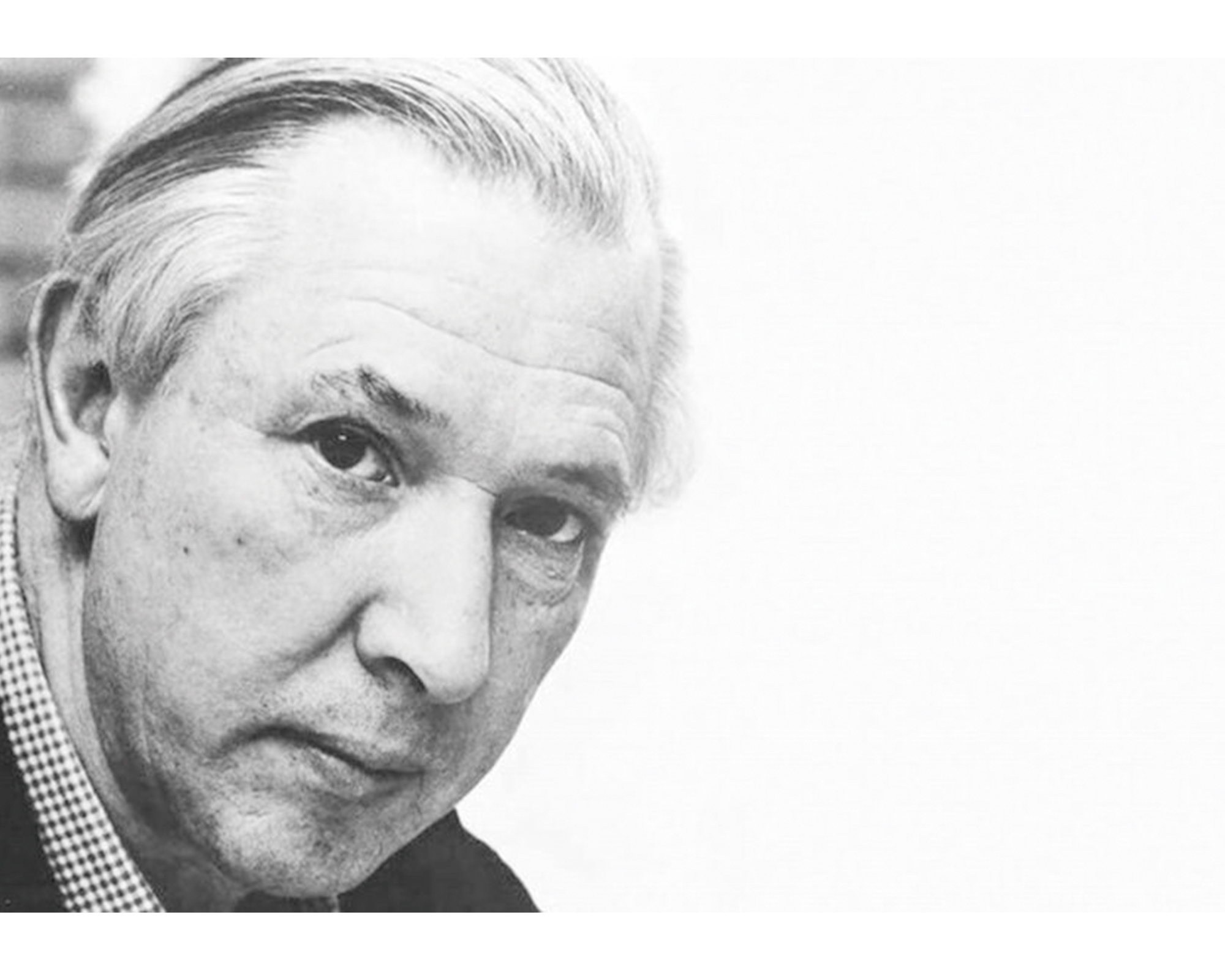
Hans Jørgensen Wegner (1914–2007) was one of the defining figures of twentieth-century Danish furniture design. Grounded in the practical skills of a trained cabinetmaker, he investigated the structure and comfort of the chair and created designs including The Chair, the Wishbone Chair, and the Bear Chair. His work also extended to sofas, tables, and storage furniture.
Born in Tønder in southern Denmark to a shoemaker’s family, Wegner entered a cabinetmaker’s workshop as an apprentice at the age of fourteen. After learning the behaviour of wood and the techniques of joinery, he studied furniture design in Copenhagen and gained experience working with architects. In 1943 he established his own design office. The knowledge acquired in the workshop remained fundamental to his ability to connect the conception of a form with the reality of making it.
Wegner repeatedly studied historic chair types. His Chinese Chairs grew from Ming-dynasty precedents; the Peacock Chair has affinities with the Windsor chair; and CH36 reflects the influence of Shaker furniture. By reconsidering the curve of a back or armrest, the angle of a leg, and the meeting point between components, he transformed familiar structures for modern life.
At the centre of this research was the body of the person sitting in the chair. Wegner considered where the back should be supported and at what height the arms should rest, and he also participated in ergonomic studies with medical specialists. An exposed timber chair and the fully upholstered Bear Chair receive the body in very different ways. Leather, textiles, cane, and paper cord were chosen according to use as he investigated both form and comfort.
His work depended equally on collaboration with workshops and manufacturers. Through long relationships with Johannes Hansen, Carl Hansen & Søn, AP Stolen, GETAMA, PP Møbler, and others, a vast range of furniture was brought into production. From drawings to prototypes and finished products, design and craft developed together. The precision visible in joints and in the shaping of wooden surfaces reflects these close collaborations.
When The Chair was featured in the American magazine Interiors in 1950 and later used in the 1960 televised presidential debate between John F. Kennedy and Richard Nixon, Wegner’s work gained symbolic international visibility. Yet he continued to explore new chair types and materials for decades. His ability to reinterpret tradition, respond closely to the human body, and work in dialogue with skilled makers defines the remarkable breadth of his furniture.
History & Works
1914 — Born on April 2 in Tønder, then in southern Jutland, to a family whose father worked as a shoemaker.
1928 — At fourteen, began an apprenticeship in the workshop of master cabinetmaker H.F. Stahlberg in Tønder.
c. 1931 — Completed his cabinetmaker apprenticeship.
1934 — Moved to Copenhagen for military service.
1936–1938 — Studied furniture design at Kunsthåndværkerskolen in Copenhagen.
1938 — First participated in the Copenhagen Cabinetmakers’ Guild exhibition. An early easy chair was made by Ove Lander.
1939 — Worked with architects Svend Erik Møller and Flemming Lassen.
1940 — Married Inga; worked in the offices of Arne Jacobsen and Svend Erik Møller on furniture connected with Nyborg Library and Aarhus City Hall. Began the collaboration with cabinetmaker Johannes Hansen that would become central to his career.
1941 — Began exhibiting furniture through Johannes Hansen at the Cabinetmakers’ Guild exhibitions.
1942 — Designed the ML33 Rocking Chair.
1943 — Established his own design office.
1944 — Designed the Peter’s Table and Chair, the China Chair FH4283, and the J16 Rocking Chair.
1945 — Exhibited with Børge Mogensen at the Cabinetmakers’ Guild. Developed works including FH1788, the Chinese Chair FH66/PP66, and AT35.
1946 — Designed the Chinese Bench, later PP266.
1947 — Daughter Marianne was born. Designed the Peacock Chair JH550, Chinese Table, and furniture for Magasin du Nord.
1948 — Participated in MoMA’s International Competition for Low-Cost Furniture Design. Developed Fritz Hansen models including FH1934 and FH1936.
1949 — Developed shell-chair prototypes and a major group of designs including JH501, later PP501 and widely known as The Chair; JH512; JH555; and CH24, the Wishbone Chair.
1950 — Daughter Eva was born. The Chair appeared in the American magazine Interiors. Carl Hansen & Søn launched a group of Wegner chairs including CH23, CH24, and CH25. Wegner also developed numerous works for Johannes Hansen, GETAMA, AP Stolen, Andreas Tuck, and other manufacturers.
1951 — Received the first Lunning Prize and a Grand Prix at the Milan Triennale. Salesco was formed to coordinate several manufacturers producing Wegner’s furniture. Designed works including JH510, AP15, AP18S, and AP19, the Papa Bear Chair.
1952 — Designed works including the FH4602 Heart Table, FH4103, CH28, CH29, JH505, and AP20 Mini Bear Chair.
1953 — Travelled in the United States and Mexico as Danish furniture exports expanded. Designed works including JH574, the GE290 series, the Valet Chair JH250, RY20, and the Bar Bench JH589/PP589.
1954 — Developed the GE181 series, AP29, GE258/259/261, AT45, AP27 Mama Bear Chair, JH530/PP530 Tub Chair prototype, and CH30, among other designs.
1955 — Continued an exceptionally productive period with designs for Carl Hansen & Søn, GETAMA, AP Stolen, Johannes Hansen, Andreas Tuck, and Ry Møbler, including CH27 and GE240-series seating.
1956 — Designed further AP Stolen furniture including AP33S and received the Eckersberg Medal.
1957 — Developed works including JH34, AP30, AP34, AP35, AP36, and CH33.
1958 — Designed furniture including JH524, CH31, the Kastrup seating group AP37–AP42, and AP43.
1959 — Received the Copenhagen Cabinetmakers’ Guild annual award. Developed works including JH517 and the Ry Møbler RY25, RY26, RY27, RY29, RY30, and RY31 storage series.
1960 — The Chair was used in the televised U.S. presidential debate between John F. Kennedy and Richard Nixon, bringing Wegner exceptional international visibility. He continued to develop furniture for Johannes Hansen, Carl Hansen & Søn, AP Stolen, GETAMA, and Ry Møbler.
1961 — Developed works including RY100, JH518, and JH713 and received the Prince Eugen Medal.
1962 — His house in Gentofte was completed. Designs from the period included JH608, JH513, JH604S, CH36, CH37, and AP50.
1963 — Continued experimenting with shell construction and developed works for Carl Hansen & Søn and AP Stolen including CH38, CH39, and AP57–AP61.
1965 — Produced a broad group of designs including JH701 and further models for Carl Hansen & Søn, AP Stolen, and GETAMA.
1966 — The long-running Copenhagen Cabinetmakers’ Guild exhibitions came to an end. Wegner continued developing beds and storage furniture for Ry Møbler.
1967 — Developed GETAMA models including GE150, GE151, GE460, and GE673, the Louis Poulsen LP16593 lamp, and the PP135 Hammock Chair.
1968 — Salesco ceased operations. Wegner continued with works including JH811, JH812, further GETAMA seating, and Ry Møbler storage systems.
1969 — Designed the GE370 and GE375 series and PP201/PP203.
1970 — Developed the JH801–JH810 series and further GETAMA furniture.
1972 — Designed GETAMA models GE50 and GE55 and PP Møbler works including PP204, PP205, PP208, and PP209.
1973 — Designed GE30.
1975 — Continued developing new seating and tables for GETAMA and PP Møbler.
1976 — Designed works including PP90, PP55, GE208–GE210, and lighting.
1977 — Developed further JH810 variants and PP Møbler designs including PP40 and PP30.
1978 — Designed GE265, Opala lighting, and PP112.
1979 — Developed JH471–JH474, PP310, and PP105.
1980 — Developed folding-table versions PP90H and PP90L, JH475, GETAMA tables and stools, PP26, and PP315. Received the Danish Furniture Prize.
1981 — Designed PP312 and PP27.
1982 — Received the C.F. Hansen Medal. Developed PP75 and PP140.
1984 — Designed GE284 and the PP124 Rocking Chair.
1985 — Continued work on new chairs including JH845 and related models.
1986 — Developed JH478, JH477, GE126, JH476, JH479, GE155, GE156, and the PP130 Circle Chair.
1987 — Designed PP68, PP58, and PP872.
1988 — Developed the FS series and PP Møbler designs including PP51/3, PP58/3, PP14, PP16, and PP20.
1989 — Developed FS402–FS404, PP56, PP12, and related PP Møbler models.
1990 — Designed PP240 and PP114.
1991 — Designed PP70 and PP130.
1993 — Designed PP193 and retired from active practice.
1995 — The Wegner Museum opened in Tønder.
1997 — Received the 8th International Design Award in Osaka and an honorary doctorate from the Royal College of Art in London.
1999 — Designed the Century 2000 series in connection with GETAMA’s centenary.
2007 — Died on January 26 at the age of 92.
Furniture
該当する記事がありません。
References
- Just One Good Chair
- WEGNER — EN DANSK MØBELKUNSTNER
- Hans Wegner’s Chair 100
- Hans J Wegner on Design
- Carl Hansen & Søn: 100 Years of Craftsmanship
- HÅNDVÆRK OG LIVSVÆRK
- 流れがわかる! デンマーク家具のデザイン史 (Japanese-language publication)