About
Lifespan
1912–1989
Birthplace
Frederiksberg, Denmark
Manufacturers
Niels Vodder / Bovirke / Søren Willadsen / France & Daverkosen (France & Søn) / Baker Furniture / Ivan Schlechter / Kay Bojesen / Niels Roth Andersen / House of Finn Juhl
Story
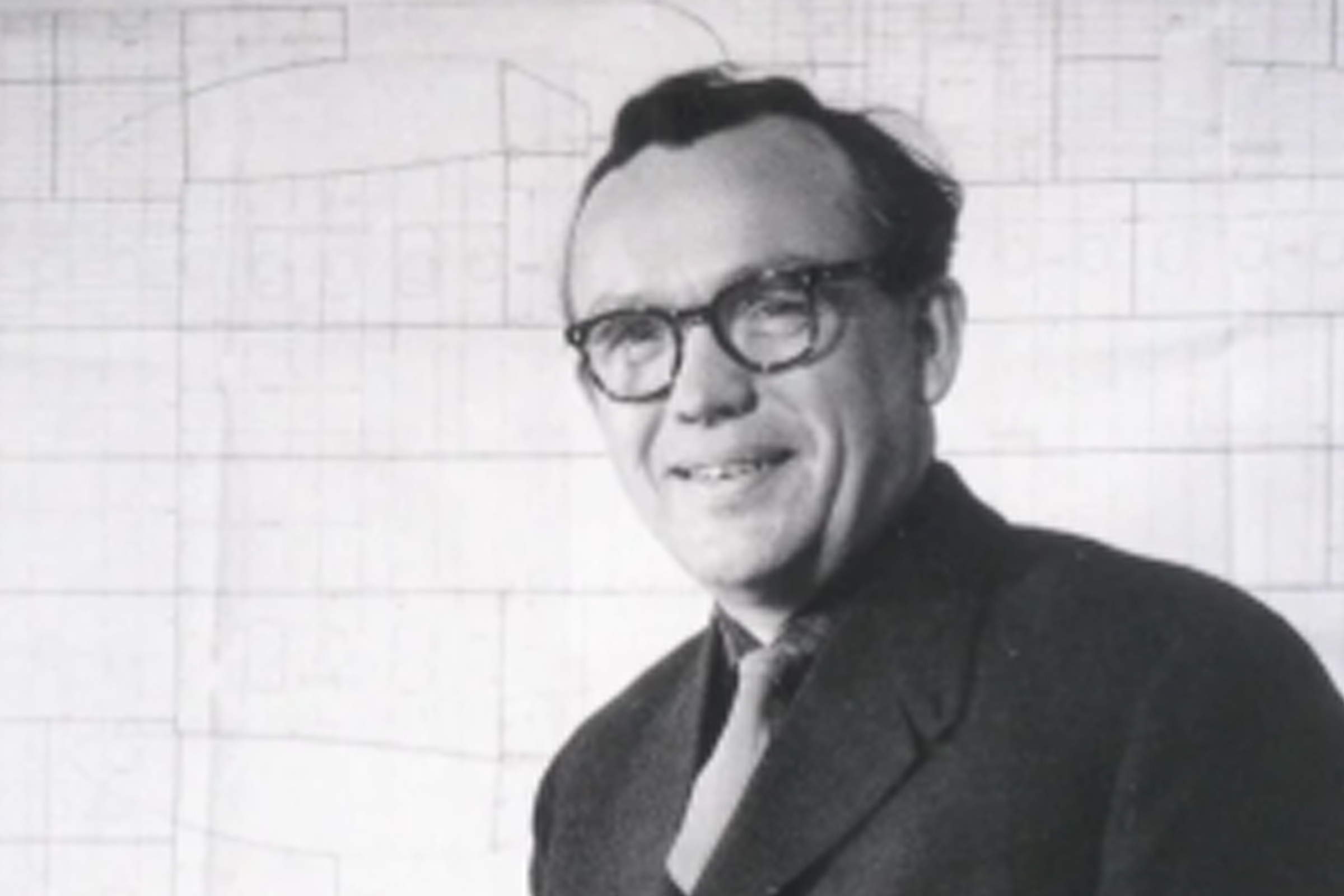
Finn Juhl (1912–1989) was one of the leading Danish furniture designers and architects of the twentieth century. Drawing on his interest in abstract art, he introduced embracing curves and sculptural, organic forms into furniture. Designs such as the Pelican Chair, 45 Chair, and Chieftain Chair clearly demonstrate this approach.
Juhl studied architecture at the Royal Danish Academy of Fine Arts and gained professional experience in the office of Vilhelm Lauritzen. He had no formal training as a cabinetmaker and explored furniture design largely on his own. His collaboration with master cabinetmaker Niels Vodder, begun in 1937, was crucial in turning complex curves and slender components into buildable pieces of furniture.
In the 45 Chair and NV53, the seat and back that support the body are visually separated from the wooden frame, clearly distinguishing the parts that support from the parts being supported. This construction gives the seat an almost floating lightness. The fully upholstered Pelican Chair is quite different, using the mass of a textile-covered volume to create an embracing form. Juhl pursued freedom of form and comfort through multiple structural approaches.
His interest extended beyond individual chairs. In his own house at Ordrup, completed in 1942, Juhl combined furniture, paintings, sculpture, and interior colour as a single spatial composition. The relationship between furniture and the space around it also informed his design of shops, exhibitions, and the Trusteeship Council Chamber at the United Nations Headquarters in New York.
During the 1950s, work with companies including Baker Furniture and France & Daverkosen expanded his practice into industrial production and international markets. He worked both with furniture suited to small-scale cabinetmaking and with designs for larger production, playing an important role in the international recognition of Danish Modern. A consistent dialogue between art, the human body, and collaboration with makers and manufacturers runs throughout his work.
History & Works
1912 — Born on January 30 in Frederiksberg.
1930 — Entered the School of Architecture at the Royal Danish Academy of Fine Arts. Visited the Stockholm Exhibition and encountered functionalist architecture.
1934 — Joined the office of Vilhelm Lauritzen. He would ultimately pursue his professional career without formally completing the Academy programme.
1937 — Began collaborating with cabinetmaker Niels Vodder and first exhibited at the Copenhagen Cabinetmakers’ Guild exhibition.
1938 — Designed the Grasshopper Chair.
1940 — Presented the Pelican Chair and Pelican Table.
1941 — Designed the sofa later known as the Poet Sofa.
1942 — Completed his own house in Ordrup, conceived as an integrated composition of architecture, furniture, art, and colour. Became a member of the Danish Architects Association.
1943 — Received the C.F. Hansen young architects award.
1944 — Designed the Bone Chair (NV44).
1945 — Left Vilhelm Lauritzen’s office, opened his own practice, designed the 45 Chair, and began teaching interior design.
1946 — Designed the Bing & Grøndahl shop interior, the 46 Sofa, and the 108 Chair.
1947 — Awarded the Eckersberg Medal for the Bing & Grøndahl interior.
1948 — Developed the 48 series and Art Collector’s Table; worked with Bovirke; met Edgar Kaufmann Jr., an important advocate of Danish design in the United States.
1949 — Designed the Chieftain Chair and Egyptian Chair.
1950 — Participated in a Danish design exhibition in London and gained wider recognition in the United States.
1951 — Designed the Good Design exhibition in Chicago, began working with Baker Furniture, and started work on the UN Trusteeship Council Chamber.
1952 — The Trusteeship Council Chamber at the United Nations Headquarters in New York was completed.
1953 — Designed the NV53 seating series.
1954 — Contributed to the Danish presentation at the Milan Triennale.
1955 — Presented a model interior at H55 in Sweden.
1956 — Began larger-scale production with France & Daverkosen and designed interiors connected with SAS, including ticket offices and aircraft.
1957 — Designed the 57 Sofa and Japan Chair and received a gold medal at the Milan Triennale.
1960 — Designed interiors for the Danish ambassador’s residence in Washington, D.C., and the touring exhibition Arts of Denmark.
1961 — Designed works including the Globe Cabinet and received the Kaufmann International Design Award.
1964 — Received an I.D.A. design award in Chicago.
1965 — Served as visiting professor at the Institute of Design in Chicago.
1970 — A retrospective of his work was held at Charlottenborg.
1978 — Named an Honorary Royal Designer for Industry in the United Kingdom.
1982 — A major retrospective was held at Designmuseum Danmark.
1984 — Awarded the Order of the Dannebrog.
1989 — Died on May 17 at the age of 77.
2001 — OneCollection acquired production rights from Hanne Wilhelm Hansen, helping return several Finn Juhl designs to production.
2003 — The Finn Juhl Prize was established.
2022 — The exhibition Finn Juhl and Danish Chairs was held at the Tokyo Metropolitan Art Museum.
Furniture
該当する記事がありません。