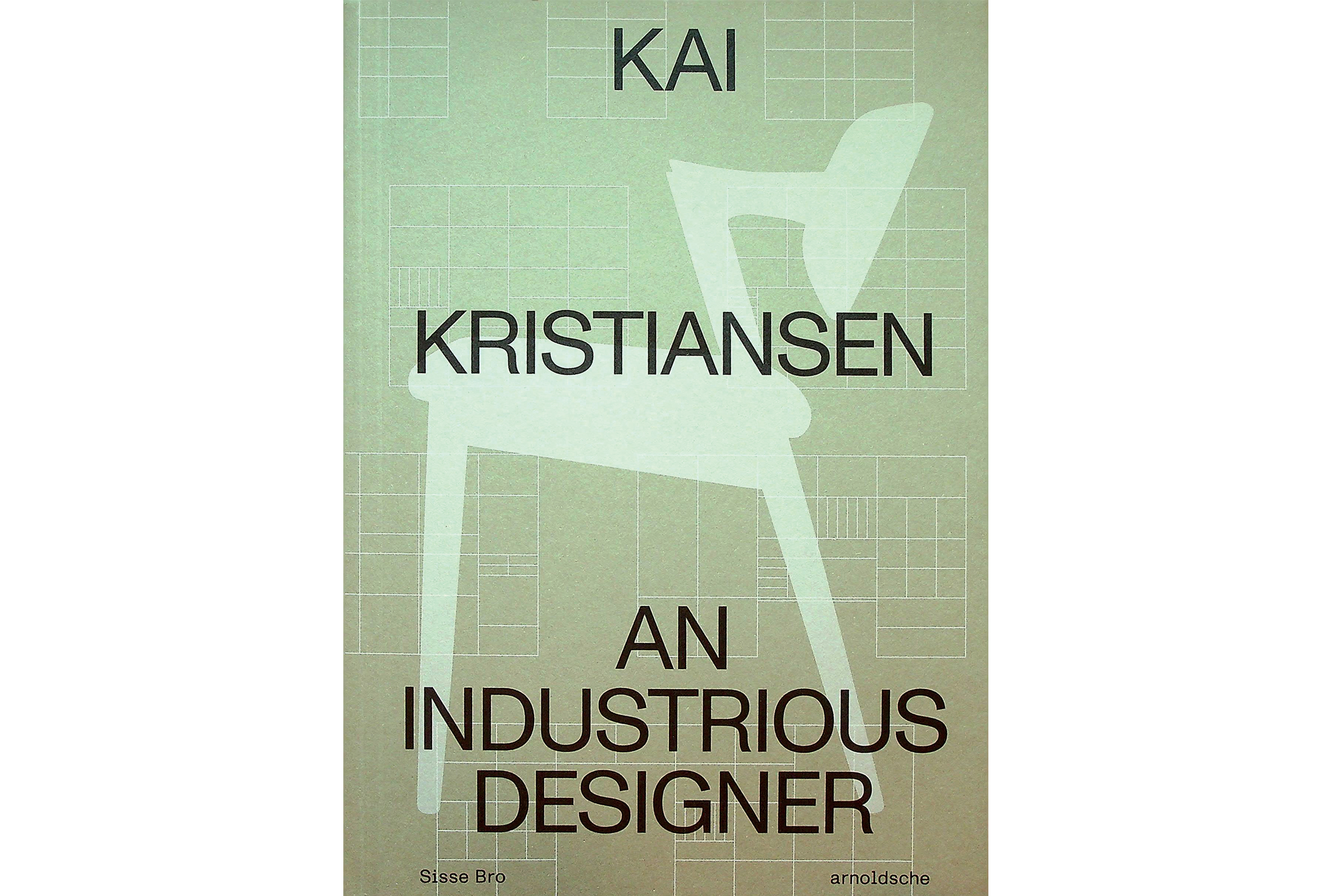
This book presents the more than seventy-year career of Danish furniture designer Kai Kristiansen. It highlights the renewed and growing international interest in his work and explains why his furniture continues to enjoy lasting popularity. At the same time, it sheds light on the stories of the many Danish manufacturers who worked tirelessly to modernize production methods throughout the country.
The origins of this publication can be traced back to around 2004, when the Japanese retailer Annik Associates expressed interest in reviving production of Kristiansen’s iconic Chair Model 42. In 2008, Miyazaki Chair Factory in Japan acquired the rights to several of his designs, including Model 42, and began manufacturing them—a turning point in bringing Kristiansen’s work back into contemporary production. Another significant moment came in 2006, when Kristiansen decided to retire and began organizing his extensive professional archive, greatly enriching the material available for this book.
Trained as a cabinetmaker and educated under the legendary Kaare Klint, Kristiansen built his design approach on mathematical precision, a deep understanding of materials, and a highly practical sensibility. His furniture is defined by accuracy in structural detail, careful shaping of each element, and a focus on comfort and function—without ever compromising beauty. Efficiency was another hallmark of his work: he often designed collections based on shared components or modular systems, and he embraced knock-down construction methods to reduce transport costs.
The book also explores Kristiansen’s close relationships with many manufacturers across Denmark, whom he regarded not merely as collaborators but as partners and friends. His designs were often tailored to the capabilities and needs of specific factories or individual projects. Rather than prioritizing personal expression, he focused on technological possibilities, market realities, and practical solutions. His willingness to reuse aesthetic ideas or structural solutions from earlier designs is another distinctive feature of his philosophy.
Even now, well into his nineties, Kristiansen continues to work with passion and curiosity. His vintage pieces remain in demand at auctions, and many of his designs—both classic and newly reissued—are still in production today. Through these threads, the book offers a deep look into the life and work of a truly “industrious designer,” explaining the enduring appeal of his furniture across decades.
About
Author
Sisse Bro
Publisher
arnoldsche Art Publishers
Size
(Information not provided)
Content
・Preface
・Biography
・Design Traits
・Efficiency
・Objectivity
・Reuse
・House Designer
・Exposure
・Location
・Relevance, Economy, Ecology and Common Sense
・Presence and Popularity
・An Industrious Designer
・Notions on Design
Furniture
・Models 4110 / 4670
・Models 204 / 215 / 230
・Model 218–219
・Shelving System (FM Wall Furniture)
・Living Room Collection
・Model A4 (A4 System)
・Model 20
・Model 52
・Model 55
・Models 515–519
・Model 141 (part of Collection 141)
・Models 130 / 137 (possibly by another designer; Kristiansen is primarily associated with Collection Universe and Models 141/161)
・Model KK7
・Model Handy
・Models 4110 / 4110 Uni Master
・Chair Model 42 and Model N042 (Model 42 is among his most celebrated designs)
・Paperknife Series / Model Paperknife (also known as Collection 121)
・Model UNI Rest
・Model VM System Tables
・Model 160
・Glass / Metal Collection
・Model VM33
・Model 63 (a writing desk with long-standing popularity)
・Model FM Wall Furniture (including systems such as FM-Reoler and desk no. 59)
・VM Sofa Series
・Collection 121 (Paperknife Collection)
・Models 4370 / 4570
・Model 410 Junior
・Model 9-85
・Treco Table / Treco Modular System / Model Treco
・Shelving System
Review
Kai Kristiansen: An Industrious Designer is a long-awaited, comprehensive study of the Danish furniture designer Kai Kristiansen, illuminating his career and vast body of work. Unlike many of his contemporaries who enjoyed significant media attention, Kristiansen remained comparatively under-recognized in design history—an imbalance this book helps to correct. Drawing on personal archives and interviews, it brings both his personality and his professional practice into sharp focus.
From his base in Jutland—far from Copenhagen’s design hub—Kristiansen collaborated with manufacturers across Denmark to bring his ideas to life. His work is marked by logic, refinement, and a commitment to function, economy, and durability. His design language reflects a deep understanding of production and materials, resulting in pieces that are both practical to manufacture and elegant in everyday use. His embrace of knock-down construction, modular systems, and efficient manufacturing solutions demonstrates a remarkably modern and industrially aware design philosophy.
The book covers a wide range of his furniture—chairs, tables, shelving systems, and more—showing his attention to detail and dedication to user comfort. Highlights include the renowned Model 42 chair, the Treco modular table system, the Paperknife collection, and numerous shelving and storage systems. Abundant photographs and drawings visually communicate his disciplined yet inventive design approach.
Kristiansen’s reflections, included throughout the book, offer valuable insight into his design thinking, his relationships with manufacturers, and the principles that guided his work. For scholars of Danish design, the book provides essential documentation of his place in design history and of the innovations in twentieth-century Danish furniture production.
For anyone interested in Danish design—or in how one designer can bridge industry and craft, theory and practice—this book is indispensable. It is a compelling exploration of a life dedicated to thoughtful, intelligent, and enduring furniture design.