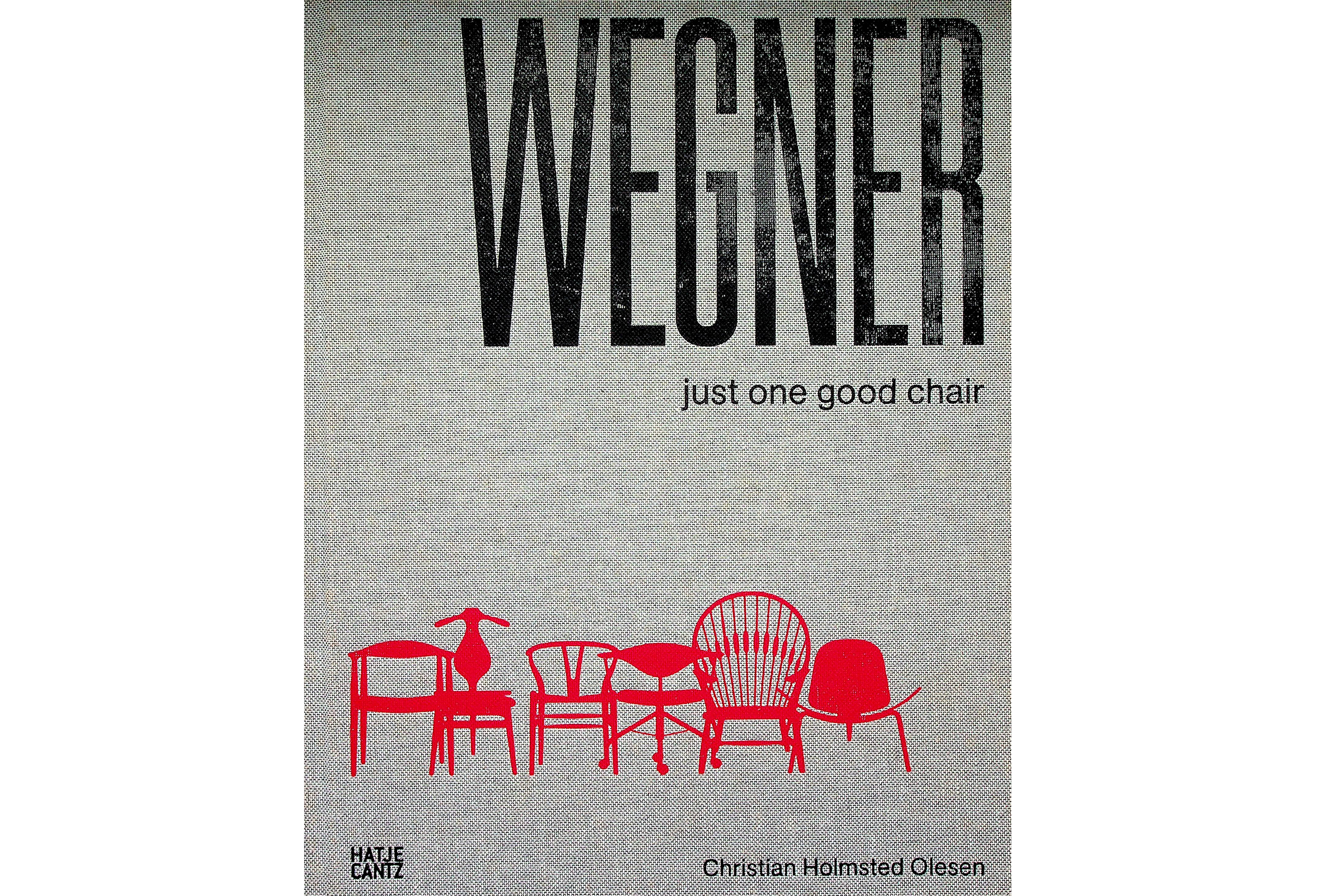
Just One Good Chair is an in-depth exploration of the life and work of Hans J. Wegner, one of Denmark’s most influential furniture designers. Published to commemorate the 100th anniversary of his birth, the book draws on extensive research, interviews with key collaborators, and rare access to Wegner’s personal archive—including original drawings, sketches, models, catalogs, and photographs. Over the course of his career, Wegner created more than 3,500 designs, including over 500 chairs, making him one of the most prolific and experimental designers of the twentieth century. This volume focuses on the chairs that defined his reputation worldwide, examining their diversity, structure, and underlying design philosophy.
Rather than presenting Wegner’s work in strict chronological order, the book organizes his designs by typology. This approach highlights the evolution within each category, recurring structural motifs, and the specific forms that repeatedly captured Wegner’s imagination.
Chairs occupy the central space in Wegner’s oeuvre—and in this book. His lifelong pursuit of “just one good chair” produced an extraordinary range of seating, each embodying its own story, construction logic, and aesthetic expression.
One of his foundational achievements, the China Chairs series, originated from a serendipitous encounter with a Ming-era Chinese armchair in a furniture shop in Aarhus. Wegner was deeply fascinated by its logical construction and sculptural beauty, and over time he reinterpreted the form through numerous variations.
The Round Chair—especially models PP501/503—stands as the spiritual successor to the China Chairs. Although some initially dismissed it as “nothing special,” American critics quickly recognized it as a breakthrough work. Its seemingly simple circular back and armrest offer both ergonomic comfort and a visual lightness combined with structural integrity. Wegner saw the Round Chair as the culmination of his craftsmanship and ideals: a design he believed could not be further improved.
The Wishbone Chair (CH24), though not an immediate success, became one of Wegner’s best-selling and most iconic works. Interestingly, Japan—despite having no historic chair tradition—became one of its largest markets.
Wegner also explored laminated and molded plywood, leading to the creation of the Shell Chairs. Designs such as the Tripartite Shell Chair and Two-Part Shell Chair exemplify the modernist ideal of achieving maximum effect with minimal material. The Tripartite Shell Chair, supported at only a few points, has even been compared to the spatial logic of modernist architectural structures.
At times, his chairs emerged from free, intuitive experimentation. The Flag Halyard Chair, for example, is said to have been conceived during a summer holiday at the beach. With its steel frame and woven flag-halyard rope, it offered an entirely new type of relaxed seating concept.
The Sawbuck Chairs series showcases a structural design language in which exposed construction becomes a defining aesthetic. Based on A-shaped frames reminiscent of a carpenter’s sawhorse, these chairs are exceptionally strong, efficient to build, and visually distinct.
Wegner’s upholstered furniture also reflects a sculptural approach. Pieces such as the Ox Chair and the Teddy Bear (Mama Bear) Chair display his ability to combine comfort with bold, organic form.
Beyond seating, the book also examines Wegner’s contributions to storage furniture and tables. His sideboards and cabinets demonstrate meticulous woodworking and intarsia, while his tables feature innovative structural solutions such as diagonally braced legs or concealed frames.
One of the most valuable aspects of Just One Good Chair is its extensive presentation of Wegner’s original drawings and sketches. These materials trace his process—from initial rough ideas to detailed technical drawings—revealing his belief that wood should exist only where necessary, and that beauty emerges from logical structure. They offer a rare insight into his iterative method and disciplined experimentation.
Wegner’s designs took inspiration from historical archetypes, but he consistently transformed them into refined, modern forms rooted in contemporary technique and sensibility. He was both a functionalist and an artist—deeply knowledgeable about materials yet committed to elevating the inherent beauty of form. His well-known statement, “A chair is only finished when someone sits in it,” encapsulates his respect for the relationship between design and user.
In sum, Just One Good Chair offers a comprehensive portrait of an extraordinary designer—his inventiveness, his vast range of work, and the philosophical depth that shaped it. For admirers of Wegner and for anyone interested in furniture design, craftsmanship, or the history of Danish modernism, this book is essential reading. It not only showcases the brilliance of individual works but also illuminates Wegner’s lasting influence on modern design.
About
Author
Christian Holmsted Olesen
Publisher
Hatje Cantz, Designmuseum Danmark
Size
(Not provided)
Content
・Preface
・From Danish Traditionalist to International Modernist
・Biography
・An Education in Design at Designmuseum Danmark
・The Apprentice
・From Functionalist Asceticism: Kaare Klint and Børge Mogensen
・China Chairs
・Round Chairs
・Spanish Conference Chairs
・Shell Chairs
・Folding and Lounge Chairs
・Sawbuck Chairs
・Upholstered Furniture
・Storage Furniture
・Tables
Furniture
(Translated and rewritten for clarity, accuracy, and English-language readability.)
・Armchair CH37 (1962)
・Windsor Chair (1949)
・Peacock Chair
・Circle Chair (unrealized design)
・Shaker Rocking Chair (1800s) – influence for later designs
・Rocking Chair (1944) – for Johannes Hansen
・Rocking Chair J16 (1944) – produced by FDB
・Rocking Chair CH45 (1965)
・China Chairs (Nos. 1–4)
・Wishbone Chair CH24 (1950)
・Dan Chair (ca. 1930)
・Café Chair – for Fritz Hansen
・V Chair PPS1/3 (1988)
・Valet Chair (1951)
・Valet Chair JH540 (1953)
・Round Chair (The Chair)
・Cow Horn Chair (1952)
・Bone Chair NV44 (Finn Juhl)
・Faaborg Chair (1914)
・Dining Chair (1956 → later CH20)
・Armchair JH701 (1965)
・Spanish Conference Chairs
・Spanish Traveling Chair (1700s)
・Conference Chair JH471
・Shell Chairs (Series)
・Shell Chair (1948)
・Tripartite Shell Chair (1949)
・Three-Shell Chair with Steel Frame
・Two-Part Shell Chair (1963)
・Tub Chair (1954)
・Butterfly Chair GE460 (1977)
・Charles Eames Lounge Chair (Comparison)
・Flag Halyard Chair GE225 (1950)
・Dining Chair CH33 (1957)
・Folding & Lounge Chairs (Series)
・Deck Chair (Kaare Klint, 1933)
・Barcelona Chair (Mies van der Rohe, 1929 – comparison)
・Fireplace Chair (1946) → JH613 (1964)
・Dolphin Chair JH510 (1950)
・Easy Chair CH25 (1950)
・Lounge Chair JH524 (1958)
・Asian Lawn Chair JH603 (1962)
・Sawbuck Chairs (Series)
・CH28 (1951)
・CH29 (1952)
・GE215 (1955)
・JH523 (1955)
・Sawbuck Chair for Johannes Hansen (1959)
・Upholstered Furniture
・Ox Chair
・Bull Chair
・Teddy Bear Chair
・Airport Chair (Kastrup Chair)
・JH800 Series (1970)
・Storage Furniture
・Sideboard by Kaare Klint (1929)
・Sideboard for Michael Laursen (ca. 1941)
・Sideboard (1942, CH304)
・Cabinet for MoMA Competition (1947)
・Sideboard (1950)
・Minibar AT34 (ca. 1959)
・Sideboard (ca. 1960, Ry Møbler)
・Tables
・Architect’s Desk JH571 (1953)
・Desk AT305 (1955)
・Lady’s Writing Desk RY32 (1955)
・Fruit Bowl JH586 (1958)
・Desk JH584 (1958)
・Frameless Tables (concept)
・Console Table PP75 (1982)
・Chippendale Chair (18th century version)
・Armchair for Cabinetmakers’ Guild Exhibition (1938)
・Aarhus City Hall Armchair (1941, Planmøbel)