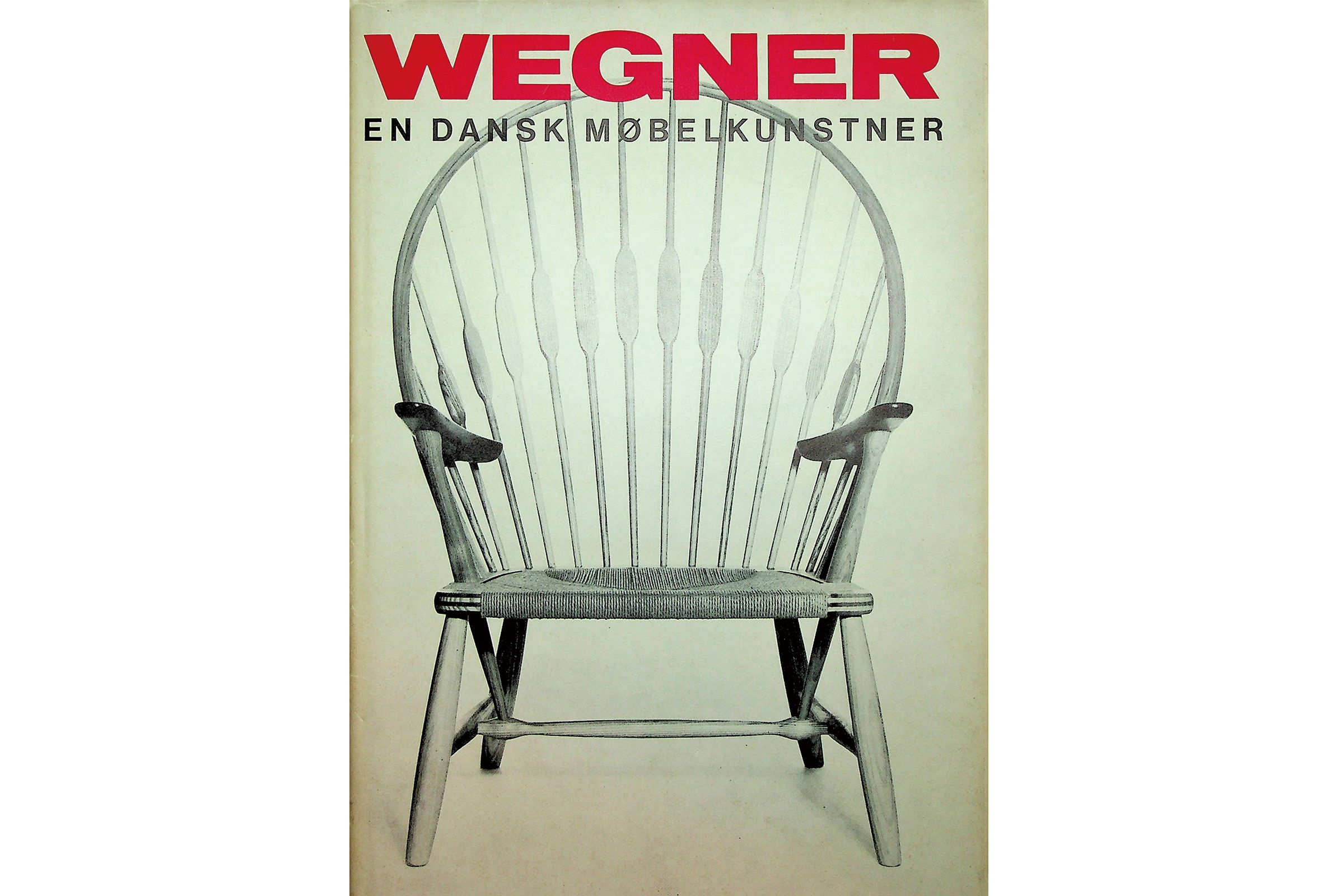
WEGNER EN DANSK MØBELKUNSTNER is a comprehensive volume dedicated to the life and work of Hans J. Wegner, one of Denmark’s most influential furniture designers. At the heart of this book is the vital and long-standing collaboration between Wegner and the master cabinetmaker Johannes Hansen. Their partnership played an essential role in shaping modern Danish furniture, particularly through their contributions to the annual exhibitions of the Copenhagen Cabinetmakers’ Guild. Hansen’s workshop became the central place where Wegner’s innovative concepts and experimental forms were brought to life, resulting in a multitude of prototypes and seminal works. Hansen is remembered for meeting Wegner’s bold ideas with extraordinary craftsmanship and remarkable openness.
Wegner’s design philosophy grew out of his early training as a cabinetmaker and his later architectural studies at the Copenhagen School of Arts and Crafts. His work reflects a deep respect for materials, a commitment to functional clarity, and a unique synthesis of traditional craftsmanship with modern form. His process was meticulous and iterative—rooted in drawing, model-making, and extensive prototyping—often requiring long development periods before a final design emerged.
The book highlights many of Wegner’s most iconic chairs: the 1949 Round Chair (also known as The Chair), which established his international reputation; the 1947 Peacock Chair with its striking fan-shaped back; the multifunctional 1953 Valet Chair; the sculptural Chinese Chairs inspired by Ming-era forms; and the widely celebrated Wishbone Chair from 1950. Beyond chairs, the volume presents his designs for tables, cabinets, sofas, and shelving systems, illustrating the breadth and consistency of his creative output.
Wegner’s furniture first gained recognition in Denmark through exhibitions and workshops, eventually receiving acclaim at international venues such as New York, Milan, and Stockholm. His work is represented in major museums worldwide, including the Museum of Modern Art in New York. Among his many honors are the 1950 Lunning Prize and the Grand Prix at the 1951 Milan Triennale. His impact in the United States was particularly significant, exemplified by President John F. Kennedy’s use of The Chair—an event that boosted Wegner’s global visibility.
Production of Wegner’s designs extended beyond Johannes Hansen’s workshop to include several major Danish manufacturers, such as Carl Hansen & Søn, Andreas Tuck, Ry Møbler, Getama, and A.P. Stolen. His furniture found its way into private homes as well as offices, banks, universities, embassies, and meeting rooms around the world. Numerous photographs in the book show interior spaces furnished with Wegner pieces, demonstrating his belief in creating harmony between furniture and architecture.
Throughout the volume, the reader gains insight into how Wegner—through his collaboration with Hansen—successfully grounded his innovations in traditional craftsmanship. The book illustrates how he forged a new design language that resonated both in Denmark and internationally, ultimately becoming a defining figure in the history of modern furniture.
About
Author
Johan Møller Nielsen
Publisher
Gyldendal
Size / Content Overview
– Foreword – p.9
1 – Den unge Wegner (The Young Wegner) – p.13
2 – Johannes Hansen – p.20
3 – På vej til et ornament (Toward Ornamentation) – p.27
4 – Da stolen blev født – 1949 (When the Chair Was Born – 1949) – p.44
5 – Verdensmøbler (World Furniture) – p.54
6 – Hverdagmøbler (Everyday Furniture) – p.81
7 – Møbelsnedkeriet (The Cabinetmaker’s Craft) – p.94
8 – Arkitekt Hans J. Wegner m.a.a. – p.110
– Summary – p.119
– Photographers – p.134
Review
Wegner: A Danish Master of Furniture Art offers an in-depth exploration of the creative evolution of Hans J. Wegner, a designer whose work shaped the identity of Danish modernism.
One of the book’s greatest strengths is its focus on Wegner’s extraordinary collaboration with master cabinetmaker Johannes Hansen. Hansen’s workshop functioned as a “laboratory” where Wegner’s bold concepts were tested, refined, and ultimately transformed into masterpieces. Their partnership was defined by mutual respect: Hansen’s exceptional craftsmanship and generous openness enabled Wegner’s experimental vision to flourish, and the book vividly documents how this rare synergy yielded some of the most iconic works of modern furniture.
The text also traces the development of Wegner’s design philosophy—shaped by his early apprenticeship, rigorous training, and deep attention to detail. The book includes rich photographic documentation of his celebrated chairs such as the Round Chair, Wishbone Chair, Peacock Chair, and Valet Chair, as well as tables, storage pieces, and numerous other designs that reveal the timeless clarity of his work.
Furthermore, the volume illustrates how Wegner’s furniture traveled from Denmark to New York, Milan, Stockholm, and beyond, eventually entering major museums and diverse public and private interiors. It demonstrates how Wegner elevated Danish furniture to worldwide prominence and how his creations have remained beloved across generations.
More than a catalogue of works, this book celebrates the passion, curiosity, and human collaboration that fueled Wegner’s creativity. It invites readers interested in furniture, design, or craftsmanship to discover the enduring value of thoughtful making—and the profound joy that emerges when function, material, and form are brought together with mastery.