

Story
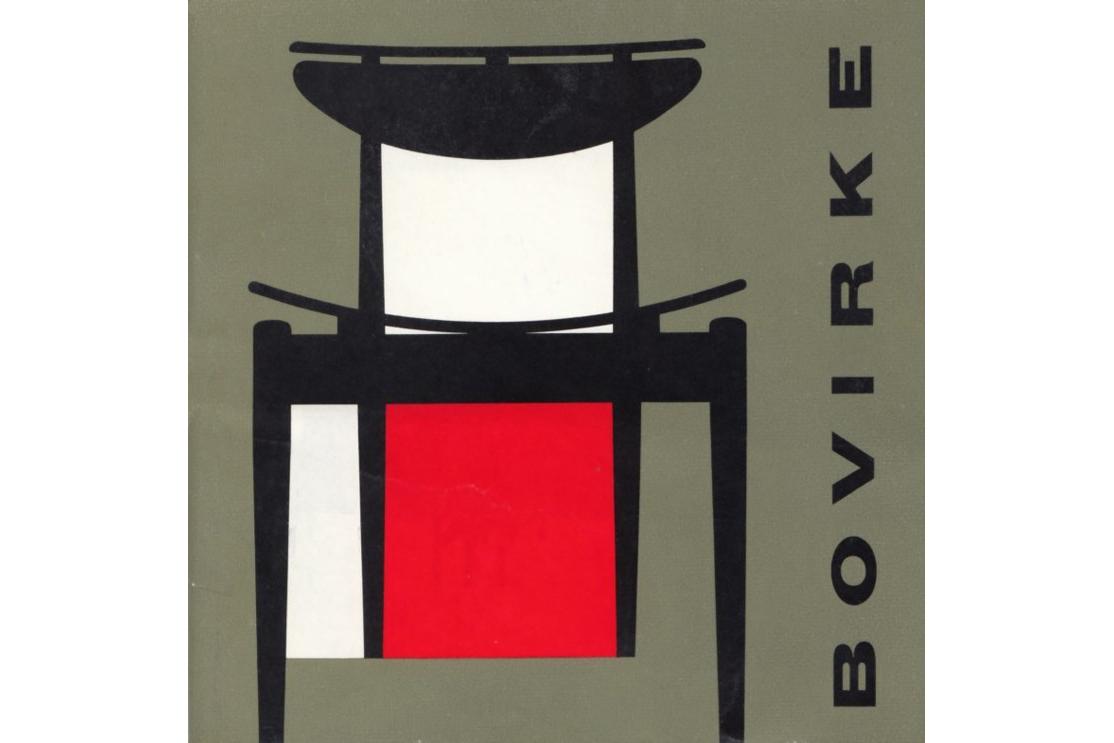
Bovirke was a distinctive furniture workshop that played a notable role during the golden age of Danish Modern design. Although its existence was relatively brief, the company left a profound mark on design history through its collaborations with pioneering designers such as Finn Juhl.
Founder Poul H. Lund envisioned a shift away from the traditional, craftsman-led model of limited production. Instead, he recognized the potential of employing more industrialized methods to bring Juhl’s complex and sculptural designs to a broader audience. In this sense, Bovirke functioned not merely as a manufacturer but as a catalyst—an intermediary that successfully bridged design innovation and practical production.
The turning point came with the 1948 “New Home” exhibition, which solidified the partnership between Bovirke and Juhl. The event presented iconic works such as the 48 Chair and the Eye Table, showcasing Juhl’s philosophy of designing not only furniture but entire spatial environments. These presentations positioned Bovirke as an essential platform for translating visionary design into actual living spaces.
Beyond its work with Juhl, Bovirke collaborated with other remarkable talents including Arne Vodder and Erik Ole Jørgensen. Their projects introduced innovative combinations of materials—ranging from wood and metal to suede—demonstrating Bovirke’s forward-thinking approach. As a result, the workshop became both a laboratory for modern design experimentation and a reliable hub for high-quality production.
Although its operations came to an end in the 1960s, Bovirke’s legacy continues. Today, House of Finn Juhl has revived the Bovirke Table, preserving the workshop’s spirit through domestic craftsmanship and traditional techniques. Bovirke remains a testament to the delicate balance between innovation and accessibility at the core of Danish Modern design—an ethos that continues to resonate today.
About
Year: 1940s–1960s
President: Poul H. Lund
Designer: Finn Juhl, Arne Vodder, Erik Ole Jørgensen, Kai Lyngfeldt Larsen
Place: Vejle, Denmark
History
1940s: Bovirke is founded in Vejle, Denmark.
1943: Finn Juhl develops the prototype for the Fireplace Chair, later produced by Bovirke.
1945: Poul H. Lund formalizes the management structure and begins full collaboration with Juhl.
1946: Juhl designs the BO55 Sheepskin Settee.
1947: Development of the 48 Chair prototypes begins.
1948: Presentation at the “New Home” exhibition featuring the Bovirke Table, 48 Chair, 46 Sofa, and Eye Table.
1949: Release of the BO59 Fireplace Chair, a key model enabling mass production of Juhl’s sculptural forms.
1950: Kai Lyngfeldt Larsen presents the Safari Armchair.
1951: Production of the BO64 Sofa begins.
1952: Arne Vodder initiates collaboration with Bovirke.
1953: Erik Ole Jørgensen introduces the BO361 Lounge Chair.
1953: Juhl designs the BO69 Desk featuring multicolored drawers.
1954: Vodder develops a series of storage furniture.
1955: Juhl unveils a new lounge chair, reflecting Bovirke’s respected manufacturing capabilities.
1956: Vodder presents the Model BO85 “Boomerang” Desk.
1957: Export production of Juhl’s BO72 Armchair begins.
1958: Bovirke expands its production for domestic and international markets.
1960: Selected Juhl designs are exported under the Bo-Ex label.
1962: Additional models by Vodder and Jørgensen diversify the product line.
1965: Production decreases due to shifts within the Danish furniture industry.
1968: Closure of the workshop.
1990s: Renewed appreciation of Finn Juhl’s work highlights the rarity of Bovirke-made pieces.
2000s: House of Finn Juhl reintroduces the Bovirke Table, continuing its legacy.
Furniture
・Bovirke Table BO62
・Fireplace Chair BO59
・Sofa BO64
・Desk BO69
・Armchair BO72
・Sheepskin Settee BO55
・Boomerang Desk BO85
・Lounge Chair BO361
・Safari Armchair