

Story
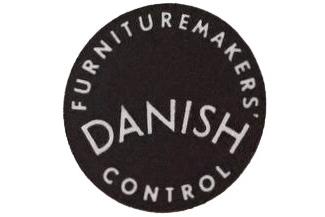
The Danish Furnituremakers’ Control (DFC), established in 1959, is a voluntary quality certification system that became one of the most recognized symbols of Danish Modern. Its round stamps, metal medallions, and paper labels are not mere decorative features—they function as international markers guaranteeing the quality of Danish furniture.
The program was created to protect Denmark’s reputation in export markets, especially in the United States, where concerns over low-quality imitations were growing. Although participation in the program was voluntary, membership required adherence to strict technical standards and biannual factory inspections. As a result, only the most reputable manufacturers were allowed to use the DFC mark.
Behind the program lay two major foundations: the long tradition of craftsmanship inherited from the Cabinetmakers’ Guild Exhibitions, and the rational, functional design philosophy championed by Kaare Klint. DFC elevated these values into an internationally recognized standard of quality control. Leading manufacturers such as Carl Hansen & Søn, Fritz Hansen, Fredericia, Andreas Tuck, and AP Stolen joined the program, and the mark appeared on works by Hans J. Wegner, Arne Jacobsen, Børge Mogensen, Finn Juhl, Ole Wanscher, and many other masters.
The “Technical Protocol” that guided DFC evaluations defined detailed requirements concerning wood selection, veneer quality, joinery methods, and finishing. These standards ensured durability and safety while allowing even small workshops to meet internationally recognized quality levels. Consequently, the overall standard of the Danish furniture industry rose uniformly.
Today, DFC continues as a specialized program under Furn-tech, with companies such as Skovby and Cube Design remaining members. In the vintage market, the DFC mark is valued as a sign of authenticity and a hallmark of the golden age of Danish Modern.
About
Year: 1959 – Present
President: Operated as a joint organizational program (currently within Furn-tech)
Designer: Hans J. Wegner, Arne Jacobsen, Børge Mogensen, Finn Juhl, Ole Wanscher, Niels Otto Møller, among others
Place: Copenhagen
History
1959: Danish Furnituremakers’ Control (Dansk Møbelkontrol) is established.
1960: The Technical Protocol is drafted, formalizing certification standards.
1961: Major manufacturers including Carl Hansen & Søn, Fritz Hansen, AP Stolen, and Fredericia join.
1963: Andreas Tuck, Ry Møbler, and J.L. Møllers Møbelfabrik join, forming an “all-star” group of Danish producers.
1965: Biannual factory inspections are instituted and membership requirements are strengthened.
1968: As Danish furniture exports peak, the DFC mark gains international recognition.
1970: Export markets increasingly highlight the DFC mark as a guarantee of Danish quality.
1975: Some manufacturers withdraw as economic pressures and mass-production demands make compliance more difficult.
1983: The DFC mark is registered as a trademark in the United States, legally affirming Danish origin and compliance with quality standards.
1990: Growing international competition prompts renewed interest in the program’s significance.
2000: DFC is reorganized and continued as a program under Furn-tech.
2006: The U.S. trademark expires, though the certification system itself remains active.
2010: Companies such as Skovby reaffirm participation, preserving the tradition.
2020: The vintage market rediscovers the DFC mark as a key indicator of authenticity.
2025: The program continues as a voluntary certification, supporting the value and reputation of Danish furniture.
Imprint/Label
・Circular stamp reading “DANISH FURNITUREMAKERS’ CONTROL”
・Metal medallions or plates affixed beneath seats or onto frames
・Paper labels or foil stickers applied to export furniture
・Branded marks stamped into rear or underside surfaces on some models
・Introduced in 1959 and later incorporated into the Furn-tech program after the 1980s