

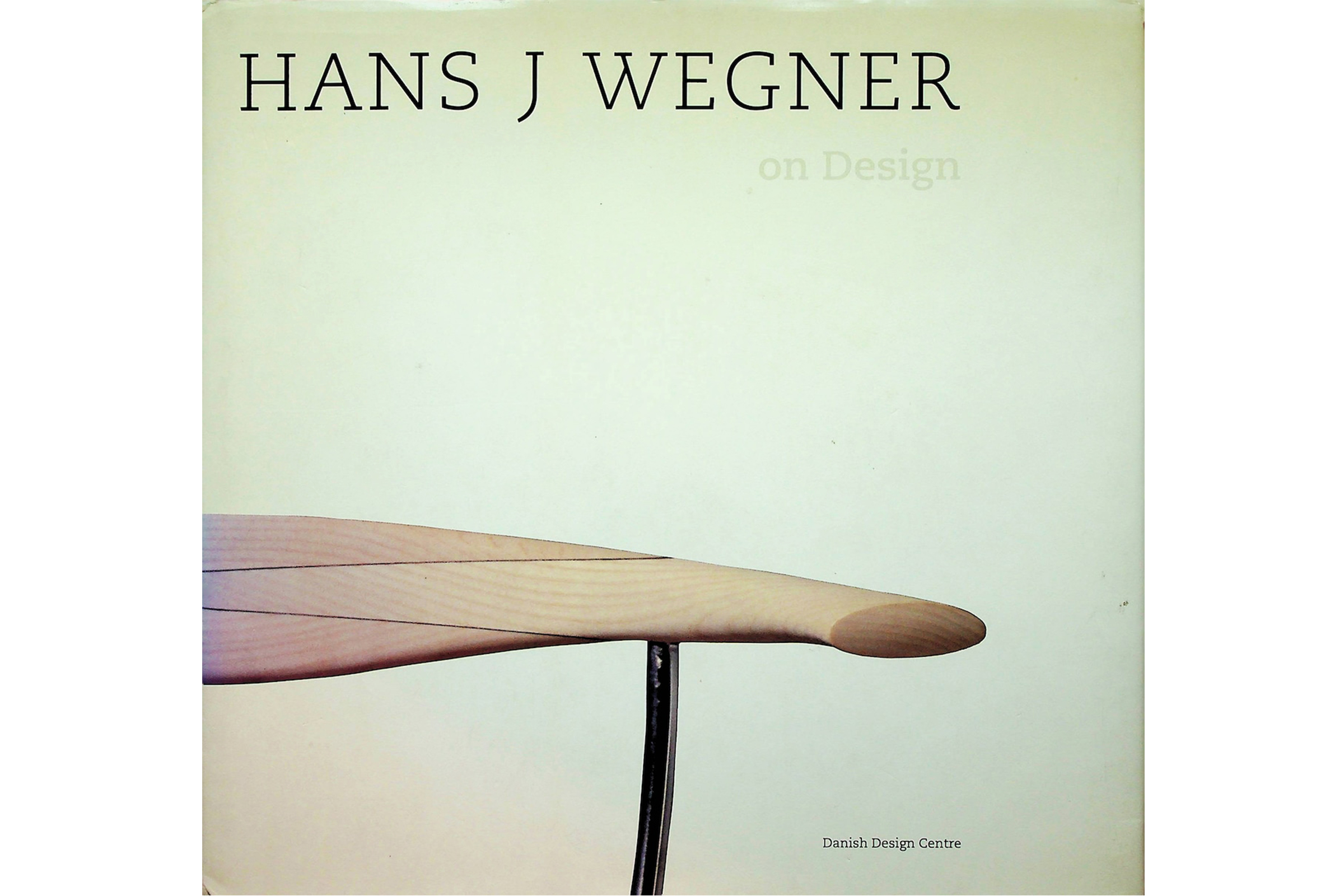
This book focuses on the work and philosophy of the Danish furniture designer Hans J. Wegner. It explores his design principles, his approach to materials, and the methods behind his creative process. It also introduces his most iconic chairs, his home, and the people and exhibitions connected to his career, offering a multifaceted understanding of how Wegner’s designs emerged and came to be recognized worldwide. Throughout the book, the importance of wood selection, craftsmanship, and the relationship between the designer and the user is strongly emphasized.
Published under the title “HANS J WEGNER on Design,” the book was edited by Jens Bernsen, with the Japanese edition released on February 14, 1995 by Living Design Center and Korin Publishing.
The volume offers an intimate window into Wegner’s world. It highlights his unique place in furniture design history, suggesting that his works exist much like new letters in an alphabet—forms that stand independently with their own identity.
The chapter structure reveals the primary themes of the book:
A Woodworker Who Writes the History of Design
This chapter explores how Wegner learned from his father, master cabinetmaker Peter M. Wegner, and how his years of training as a craftsman shaped the historical trajectory of his design work. It also examines the transition from handcrafted one-offs to industrial production.
Design as a Process
The book details Wegner’s design process—from initial ideas and sketches to 1:5 and 1:1 scale models, and finally to technical drawings. For Wegner, designing chairs was an endless task: always the pursuit of making a better chair.
Working Drawings
A discussion of the precise draftsmanship required in furniture-making. Wegner is described as one of the few designers capable of producing highly accurate technical drawings himself.
Wegner and Wood
An exploration of Wegner’s deep understanding of wood—its properties, its correct applications, and his personal affection for the material. Wood grain is treated as an essential part of the design, influencing the final appearance of a piece.
The House in Tøndervej
An introduction to the home Wegner designed for his family in 1962. The house is simple yet built with exceptional carpentry precision, with the first floor largely occupied by Wegner’s studio and workshop.
Works and References
A catalogue of Wegner’s works, awards, and locations where his pieces are exhibited.
The book also conveys Wegner’s core design philosophy. Among his principles:
- Wood grain is part of the design.
- A user is part of the design; a chair is only complete when someone sits in it.
- Furniture must have no “back side”—it should be beautiful from every angle.
- Chairs should have individuality.
- Quality is paramount and must be accepted as something that comes with cost.
- The loss of craftsmen’s knowledge is a cause for concern.
- Materials should be as genuine and natural as possible.
- Unnecessary material should be removed.
- Structure must be logical and visibly expressed.
Many of these insights came from Wegner’s extensive dialogues with Jens Bernsen, which form the foundation of the book. The discussions reveal Wegner’s guiding principles, aspirations, and the processes behind his designs—serving as a valuable reference for future generations of designers.
Some of the iconic works featured include:
The Round Chair, The Wishbone Chair, The Chinese Chair, The Valet Chair, The Flag Halyard Chair, The Ox Chair, and The Hoop Chair.
While wood is the material most associated with Wegner, he worked with many materials and believed deeply in understanding the essence, potential, and limitations of each. His ideas extend well beyond furniture design and continue to hold relevance today.
About
Author
Jens Bernsen
Publisher
Living Design Center
Size
24.5 × 23.5 cm (120 pages)
Content
- Introduction
- A Woodworker Writes the History of Design
- Design as a Process
- Working Drawings
- Wegner and Wood
- The House in Tøndervej
- Catalogue of Works and References