

About
Designer: Hans J. Wegner
Manufacturer: Johannes Hansen, PP Møbler
Year: 1949
Material: Teak, Oak, Walnut, Ash, Cherry, Rattan, Leather
Size: W 630 × D 460–520 × H 740–760 (SH 440–450) mm
Story
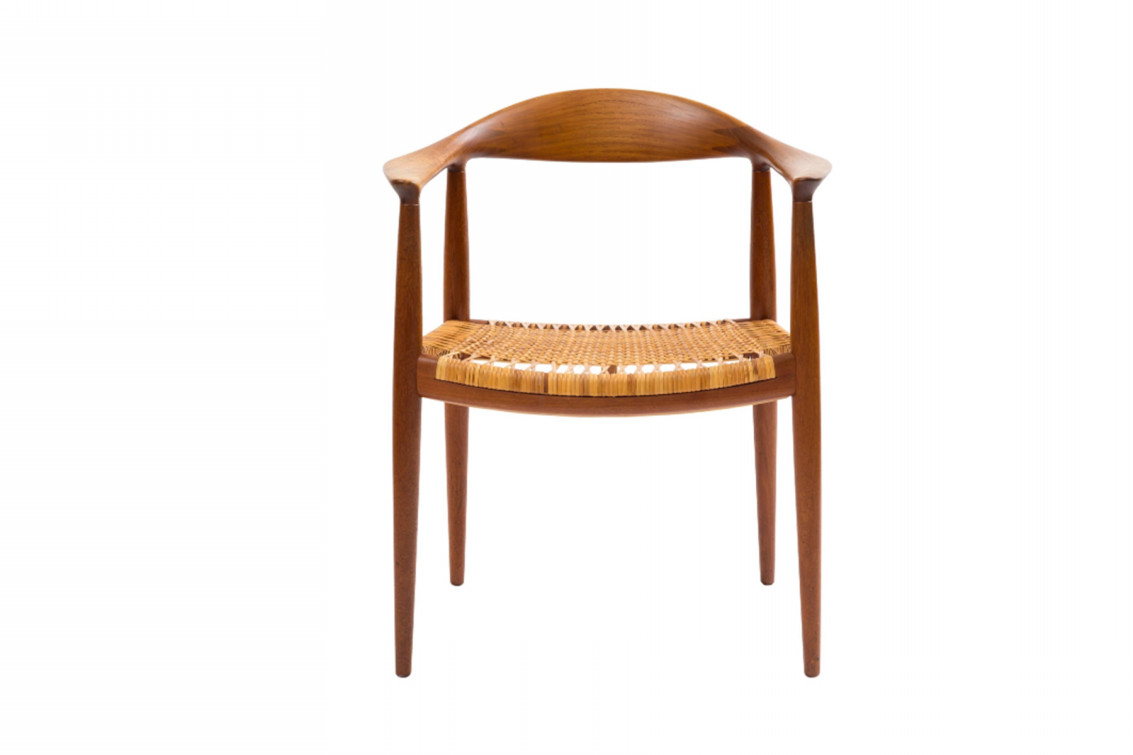
Designed by Hans J. Wegner in 1949, The Chair (JH-501 / JH-503) stands as one of the most iconic works that carried Danish Modern design onto the global stage. In Denmark it is known as Den Runde Stol (“The Round Chair”), while internationally—especially in the United States—it became simply The Chair. Its debut at the Copenhagen Cabinetmakers’ Guild Exhibition, followed by praise from Interiors magazine as “the most beautiful chair in the world,” secured its immediate international recognition.
The origin of the design can be traced to a request from Wegner’s long-time collaborator Johannes Hansen, who asked for a more traditional chair. At the time, Wegner was producing many experimental designs using molded plywood, yet for this project he deliberately returned to solid wood and classical cabinetmaking principles. Remarkably, the chair was conceived within just forty-eight hours. Beneath its calm and restrained appearance, however, lies an extraordinary level of technical refinement and structural calculation.
The defining feature of The Chair is its continuous semi-circular frame that integrates the backrest and armrests into a single sculptural form. This curve is not merely aesthetic; it is structurally rational, maximizing the strength of the wood while maintaining visual lightness. Early versions (JH-501) concealed the joint at the back by wrapping it in rattan. By 1950, this was replaced by a distinctive zigzag finger joint, creating a fully exposed solid-wood frame that enhanced both strength and visual unity. The joint itself became an integral part of the design expression.
The JH-501 features a hand-woven rattan seat, offering a light, breathable sitting experience. In contrast, the JH-503 is upholstered, providing a softer feel through leather or fabric. The upholstered version emerged in response to a specific challenge in the American market: variations in humidity caused rattan seats to loosen over time. Upholstery resolved this issue and expanded the chair’s international appeal. In 1960, the JH-503 gained historic visibility when it was used in the televised presidential debate between John F. Kennedy and Richard Nixon, earning the nickname “The Kennedy Chair.”
Production was initially carried out at the Johannes Hansen workshop, where the chair was made in small quantities by highly skilled craftsmen. A single order of four hundred chairs for a Chicago club reportedly required two years to complete, and even by 1966 production remained limited to only a few chairs per day. Since 1993, PP Møbler has taken over production, continuing to refine the chair in close accordance with Wegner’s intentions, with an emphasis on sustainability and durability designed to exceed a century of use.
The Chair is more than a piece of furniture; it is a synthesis of ergonomics, material beauty, and masterful craftsmanship. Free from passing trends, it integrates effortlessly into contemporary interiors while offering both comfort and quiet authority. This timeless balance is precisely why, more than seventy years after its creation, The Chair remains one of the most celebrated chairs in the history of modern design.