About
Lifespan
1888–1954
Birthplace
Frederiksberg, Copenhagen, Denmark
Manufacturers
Rud. Rasmussen / Fritz Hansen / Le Klint / Carl Hansen & Søn / Fredericia
Story
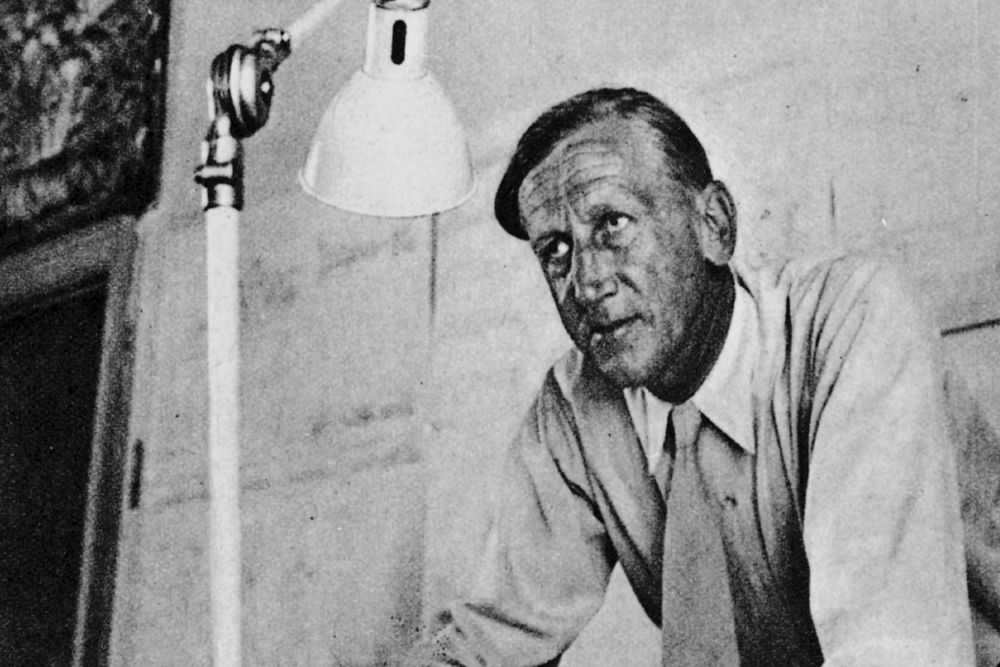
Kaare Klint (1888–1954) was an architect, furniture designer, and educator who helped establish the foundations of modern Danish furniture. Often described as the father of modern Danish furniture design, he rejected the idea of choosing forms from prevailing styles and instead developed a method in which use, human dimensions, materials, and construction determine the form.
Born to the architect P.V. Jensen-Klint, Klint learned furniture making and drawing and gained architectural experience with his father and with Carl Petersen. In 1914 Petersen commissioned him to design furniture for Faaborg Museum. Klint’s Faaborg Chair—his first formal furniture commission—combined enough lightness for visitors to move it in front of artworks with a restrained presence that did not compete with the gallery space, making it an important starting point for later Danish Modern.
Klint did not dismiss historic furniture as obsolete style. Instead, he examined its structure and use and adapted its logic to contemporary life. This method, later often described as “re-design,” is evident in the Red Chair Series, based on eighteenth-century English chairs, and in the Safari Chair, a refined interpretation of the British military Roorkhee Chair. His goal was not imitation but the removal of unnecessary elements and the reconstruction of proportion and structure.
His analysis went beyond anthropometric measurements. He studied how a body sits in a chair, how a table is used, and the actual dimensions of everyday objects such as tableware, clothing, and books to determine necessary sizes and storage capacities. At the Royal Danish Academy he had students measure existing furniture and household objects so that form would be tested against functional requirements rather than determined by intuition alone.
In 1924 Klint co-founded a centre for furniture design education at the Royal Danish Academy of Fine Arts and later became a professor. Ole Wanscher, Mogens Koch, and Børge Mogensen were among those who carried his principles into postwar Danish furniture. His influence lies less in any single visual vocabulary than in a design process built on observation, measurement, and prototyping.
He applied the same integrated thinking to architecture and interiors. He worked on the conversion of the former Frederiks Hospital into the Kunstindustrimuseet, now Designmuseum Danmark, and designed furniture for the museum. After his father’s death he took over work on Grundtvigs Kirke and completed it in 1940. Bethlehemskirken and the Church Chair likewise demonstrate an approach in which architecture, furniture, and use are considered as parts of a single whole.
In collaborations with furniture workshops such as Rud. Rasmussen, Klint pursued structural clarity through fine materials and advanced woodworking. From the Faaborg Chair, Red Chair, Mix Chair, Safari Chair, and Addition Sofa to the Propeller Stool, his diverse designs share a consistent effort to reconcile an understanding of history with the needs of contemporary life. That methodology remains a fundamental reference point in Danish furniture design.
History & Works
1888 — Born on December 15 in Frederiksberg.
1914 — Designed furniture for Carl Petersen’s Faaborg Museum, including the Faaborg Chair. The museum opened the following year.
Early 1920s — Worked with Ivar Bentsen on the conversion of the former Frederiks Hospital into the Kunstindustrimuseet, designing furniture and fittings for the museum.
1924 — Helped establish furniture design education at the Royal Danish Academy of Fine Arts.
1927 — Designed the Large Red Chair for the museum auditorium, developing the wider Red Chair Series.
1928 — Received the Eckersberg Medal.
1929 — The Large Red Chair was shown in the Danish pavilion at the Barcelona International Exposition.
1930 — Designed the KK43960 Mix Chair and Propeller Stool; after his father’s death, took over work on Grundtvigs Kirke.
1933 — Designed the Safari Chair and Addition Sofa and presented them through the Copenhagen Cabinetmakers’ Guild.
1935–1938 — Worked on Bethlehemskirken in Copenhagen.
1936 — Designed the Church Chair.
1938 — Designed the Spherical Bed.
1940 — Completed Grundtvigs Kirke, including its altar, pulpit, furniture, and organ scheme.
1944 — Appointed professor at the Royal Danish Academy; designed Le Klint’s Model 101 Lantern.
1945 — Designed the Le Klint Model 306 Kip Lamp.
1949 — Named an Honorary Royal Designer for Industry.
1954 — Died on March 28 in Copenhagen and was awarded the C.F. Hansen Medal.
1962 — The Propeller Stool entered production posthumously.
Furniture
該当する記事がありません。
References
- Gorm Harkær, Kaare Klint
- Designmuseum Danmark
- Faaborg Museum
- Grundtvigs Kirke