

The Chair as the Closest Companion to the Human Body
Throughout their lives, many designers find themselves drawn again and again to the chair. Architects, sculptors, and craftsmen alike eventually confront this most fundamental object. Why is that so?
Hans J. Wegner offered a clear answer: “A chair is the object closest to the human being. That is why a chair can reflect the character of the person who uses it.”
In this statement lies the core of Wegner’s lifelong pursuit of humanity through furniture.
The Chair as a Reflection of Culture
A chair is more than a practical household object. It is a mirror of culture and society. Even in its simplest structure, a chair condenses the history of technology, social order, and human thought. From ancient thrones to ecclesiastical seats, the act of sitting has long been associated with authority and power. Posture itself once expressed status and control.
Wegner understood this historical lineage and sought to redefine it. His ambition was to create chairs suited not for hierarchy, but for modern human life.
Design That Embodies the Human Form
Wegner’s chairs possess a warmth that feels intimately connected to the human body. Flowing curves, softly treated joints, and finishes that allow the wood to breathe—each element was carefully considered to support both body and mind.
While he rigorously studied structure, joinery, and strength, Wegner never lost sight of what mattered most: how a chair feels when touched and used. For him, a chair was not merely a functional construction, but a sculptural expression of the human form itself.
The Spirit of Democratic Design
In the twentieth century, the chair transformed from a symbol of privilege into an everyday companion. People gained the freedom to choose their own chairs and project their values onto them.
Within this shift, Wegner applied the same honesty and care to chairs for royalty as he did to chairs for ordinary homes. Across his work runs a consistent philosophy of human-centered design. His furniture does not dominate a space—it enriches daily life quietly and persistently.
What “The Chair” Represents
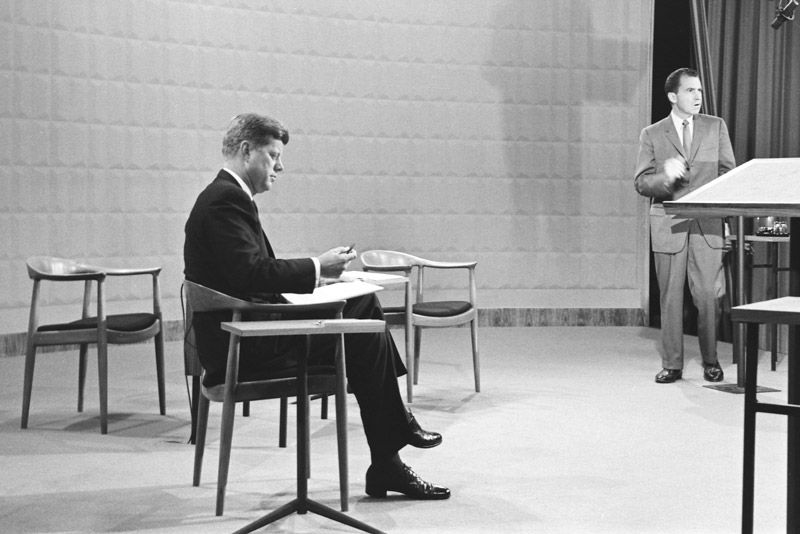
Wegner’s Round Chair, widely known as The Chair, stands as the clearest embodiment of his philosophy. In 1960, it gained global recognition when John F. Kennedy and Richard Nixon sat in it during their televised presidential debate. At that moment, a single chair became a symbol of democracy.
Its open, curved back combines dignity with approachability, offering freedom in posture and expression. Whether sitting formally or at ease, the chair supports the body with equal grace. This balance defines what Wegner meant by “the chair closest to the human being.”
The Question Wegner Left Behind
Wegner’s work goes beyond design exploration. It is an inquiry into what it means to be human. His chairs protect the dignity of those who sit in them and accompany people throughout their lives.
The question “What is a chair?”—posed by Wegner decades ago—still resonates today. A chair is not only an object that supports the body, but a vessel that reflects human spirit, culture, and identity.
Related Article:
• The Chair | Wegner’s Vision of the Perfect Chair