

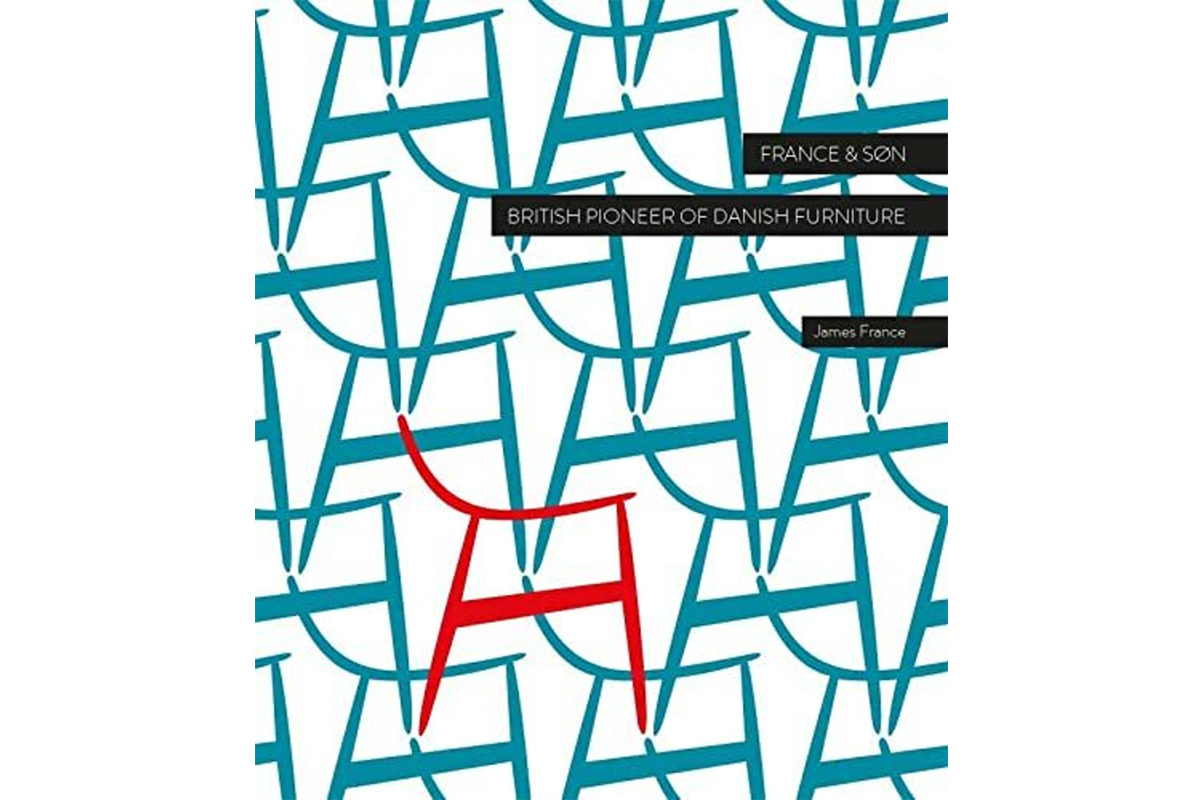
This book explores how the British entrepreneur C.W.F. France became a pioneering force in Denmark’s postwar furniture industry, successfully establishing the industrial production and global export of high-quality modern furniture. Terence Conran notes that he first learned of France’s entrepreneurial spirit and his contribution to Danish furniture design through James France—his classmate at Bryanston School and the son of C.W.F. France.
As a young man, France met the Dane Erik Daverkosen, who had come to Britain as a trainee at a Yorkshire flour mill. Both families were involved in textile manufacturing, forming a natural connection. In 1926, France visited the Daverkosen family in Denmark, though the two men would not meet again for another ten years. When Erik later fell ill during his management of the mattress company LAMA, he asked France to take over. This invitation prompted the France family to relocate to Denmark. France became deeply absorbed in the complexities of mattress production and dramatically increased sales within a short time.
However, after Germany occupied Denmark during the Second World War, France, as a British citizen, was arrested, imprisoned in Denmark, and subsequently deported to a German prison, where he remained for five years. During captivity, he imagined his postwar ambitions: producing furniture springs and pads at the mattress factory and collaborating with Danish designers to manufacture export-ready flat-pack furniture. This concept—already explored by Thonet—was revolutionary in Denmark and offered a forward-looking solution to high shipping costs.
After the war, France joined the United Nations Relief and Rehabilitation Administration (UNRRA) before returning to Denmark, where he and Erik Daverkosen founded France & Daverkosen. Following Erik’s death, France assumed full ownership. He first rebuilt the LAMA mattress business, quickly increasing turnover and becoming a market leader. He invested in advanced American machinery to improve productivity.
In the furniture division, France set out to produce high-quality industrially manufactured furniture. He rejected the traditional belief that fine furniture must be handcrafted in small workshops, arguing instead that machines could produce more precise and cost-efficient components. With strict quality control at the finishing stage, he believed factory-made furniture could match the quality of artisan craftsmanship. He also emphasized that only manufacturers—not small workshops—had the financial ability to experiment with new technologies and materials. In this sense, France & Son was unique among major Danish manufacturers because its founder had no traditional cabinetmaking background.
France played a key role in elevating the international visibility of Danish furniture, which until then was little known outside Scandinavia. By collaborating with Danish designers and developing flat-pack manufacturing for complex, sculptural pieces—especially those by Finn Juhl—France enabled the export of sophisticated designs at accessible prices. This strategy allowed Denmark’s finest furniture to reach the global market, with 80% of production eventually destined for export. France aimed for his products to be regarded as the “Rolls-Royce” of Danish furniture while always maintaining sensitivity to pricing.
France & Son collaborated with prominent designers such as Ole Wanscher, Peter Hvidt & Orla Mølgaard-Nielsen, and Finn Juhl. Juhl, who favored teak, faced the challenge that teak quickly dulled cutting tools. France & Son solved this by adopting tungsten-carbide cutters, enabling the industrial use of teak. The company became the world’s largest importer of Far Eastern teak for many years, spending roughly five million kroner annually. While tabletops were initially made entirely of solid teak, shortages eventually necessitated a move to veneer construction.
The company introduced branded markings bearing the France & Daverkosen or France & Son logos to ensure product recognition and quality assurance. The well-known double-F logo was created in 1956 by Claus Acton Friis. In the United States, France partnered with the John Stuart company, and its furniture won Good Design Awards at the Museum of Modern Art, significantly boosting its reputation. France & Son pieces also appeared in James Bond films and the TV drama Mad Men, further cementing their status as icons of contemporary style.
France believed that the best results required the best working conditions. He modernized his factories and invested heavily in staff welfare. Yet he remained something of an outsider, refusing to join the Danish Furniture Manufacturers Association and earning the resentment of some competitors. Instead, he attracted skilled workers by offering unusually high wages. France is famously quoted as saying, “My furniture must be the Rolls-Royce of furniture,” but he also maintained that the company produced “average-quality furniture, not luxury goods,” and that its mission was “to make good, well-designed furniture at the right price for everyday use.”
By the early 1960s, France’s health declined, and he retired to the south of France, though he continued to worry about the business until it was eventually sold. His retirement marked the departure of one of the most distinctive personalities in the Danish furniture industry. In a tribute, Frederik Schiøtt described France as a man of genius, considerable charm, and dramatic temperament whose name had become a legend—synonymous with the rise of Danish furniture exports.
This book documents how a single British entrepreneur, shaped by the hardships of wartime imprisonment, became a pivotal figure in postwar Danish furniture manufacturing. Through industrial production, flat-pack innovation, collaboration with leading designers, and an ambitious export strategy, France transformed Denmark’s furniture industry and helped propel Danish design onto the world stage. His entrepreneurial spirit and unwavering commitment to quality were the driving forces behind this success.
About
Author
James France
Publisher
Forlaget VITA
Size
24 × 27 cm (138 pages)
Content
- Introduction
- From Britain to Denmark
- Years of War and Imprisonment
- Postwar Rebuilding and the Start of Furniture Production
- Growth of France & Søn and Export Strategy
- Collaborations with Notable Designers
- International Success and Brand Establishment
- The End of the Business and Aftermath
- The Legacy of France & Søn
Furniture Overview
(Your furniture list is long and already in English; if you want, I can refine, organize, or format it into a proper catalog-style English version.)
Review
France & Søn – British Pioneer of Danish Furniture documents the rise of the company through the perspective of James France, son of the founder. As Scandinavian modern design gained international recognition after the war, France & Søn played a decisive role in developing export markets and transforming Danish furniture into a global industry.
C.W.F. France was not a cabinetmaker or designer, but an entrepreneur. By mass-producing flat-pack designs and implementing modern logistics and quality-control strategies, he turned Danish chairs and tables into products that could compete internationally. His approach, radical in an era dominated by artisan workshops, was remarkably modern and innovative.
France & Søn collaborated with leading designers of the period—Finn Juhl, Ole Wanscher, and Peter Hvidt & Orla Mølgaard-Nielsen—producing industrial furniture that did not compromise beauty or function. The book provides detailed records of how each model was conceived and manufactured.
The company’s pivotal role in Danish furniture exports during the 1950s and 60s is often overlooked. This book fills that gap, offering a historically grounded account of how Danish design shifted from “artistic creations” to “global consumer products.”
It is a valuable resource not only for those interested in furniture history but also for readers studying the intersection of design, industry, craft, and global trade. Beyond the aesthetic appeal of Danish furniture, the book reveals the structural effort and innovation required to bring these designs to the world.