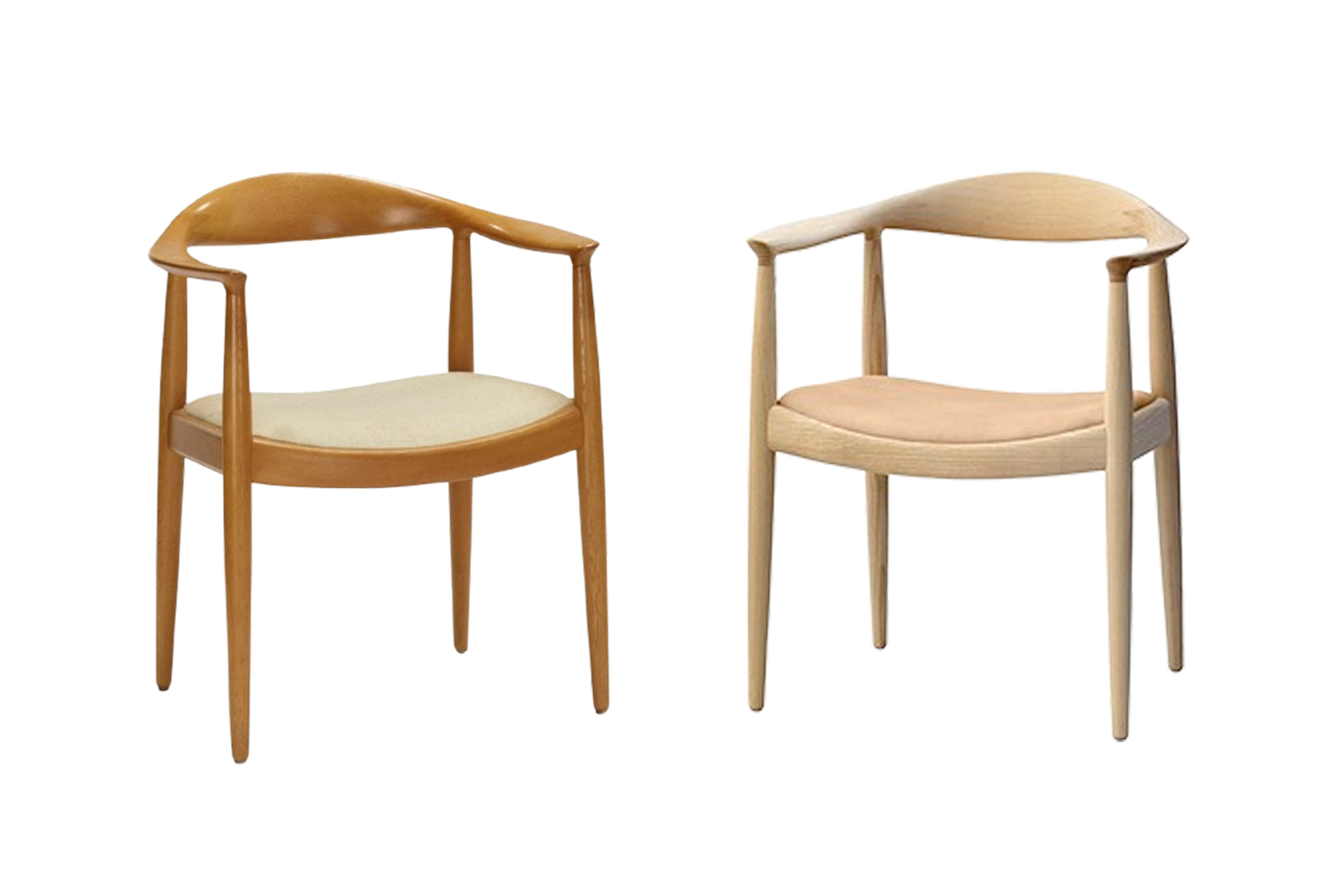
In 1949, Hans J. Wegner introduced the JH503 “The Round Chair,” a design that remains one of the defining works of twentieth-century furniture. Its continuous semicircular form flows from the backrest into the armrests with a sculptural clarity, while its proportions and support reflect careful ergonomic thinking. Wegner described the chair as the product of a “continuous process of purification,” stripping away decoration in order to concentrate on the beauty of wood and the logic of construction.
The result transcends the category of furniture, bringing together the knowledge of the cabinetmaker and the ideals of modern design. The chair attracted attention in the United States soon after its introduction, and its use by both candidates in the 1960 Kennedy–Nixon presidential debate helped establish it internationally as a symbol of Danish Modern. Its quiet but exact structure and its ability to reveal the natural character of wood continue to represent Wegner’s pursuit of refinement through simplicity.
JH-503 | Johannes Hansen | Vintage Production (1950–1990)
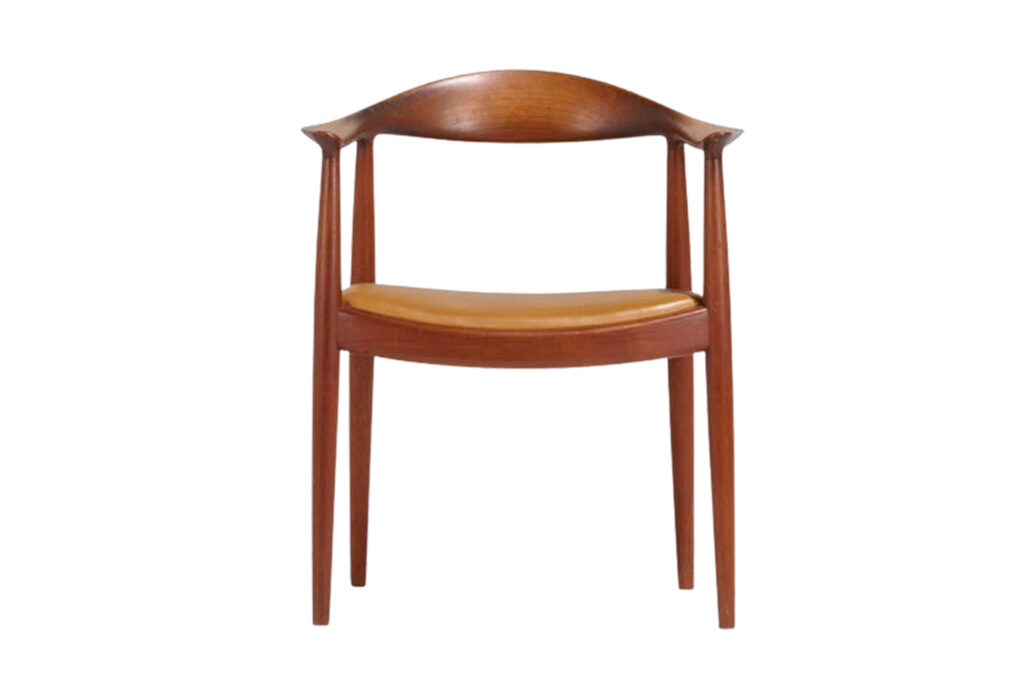
The JH503 version of “The Chair” was originally made by the skilled cabinetmakers of Johannes Hansen. Early examples used a concealed mortise-and-tenon joint wrapped in cane at the junction between the back and arms; from 1950 onward, at Wegner’s request, this evolved into the distinctive zigzag finger joint.
Production was extremely limited, at only a few chairs per day, and differences in details and finish can be seen from period to period. In the United States in particular, its traditional method of manufacture and restrained form were highly regarded. The chair became widely known as “the chair” and gained international fame through its use in the Kennedy–Nixon debate. Examples retaining their original stamps and in good condition command high prices on the vintage market.
PP-503 | PP Møbler | Current Production (1992–Present)
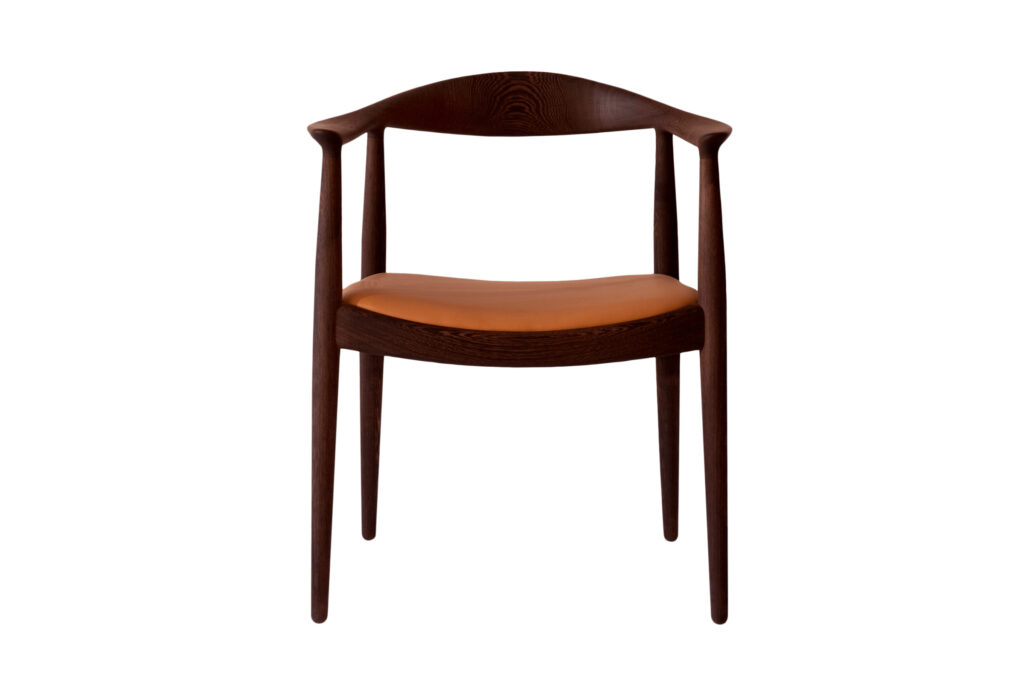
Since 1992, PP Møbler has continued production of “The Chair” as the PP503 under an official licence for Hans J. Wegner’s design. The model is available in woods including oak, ash and walnut, with a range of finishes such as soap treatment and black tannin staining. Seats can be specified in leather, fabric or cane, allowing the chair to be adapted to different interiors.
Production combines CNC machining, three-dimensional forming and pre-compression techniques, with joints engineered to withstand approximately one tonne of tensile force. Timber is sourced through sustainable methods and can undergo up to two years of natural drying before use. By combining cabinetmaking skill with modern production technology, the PP503 is widely regarded as a contemporary expression of Wegner’s design at a very high level of manufacture.
The Chair JH-503 vs PP-503 | Differences Between Johannes Hansen and PP Møbler
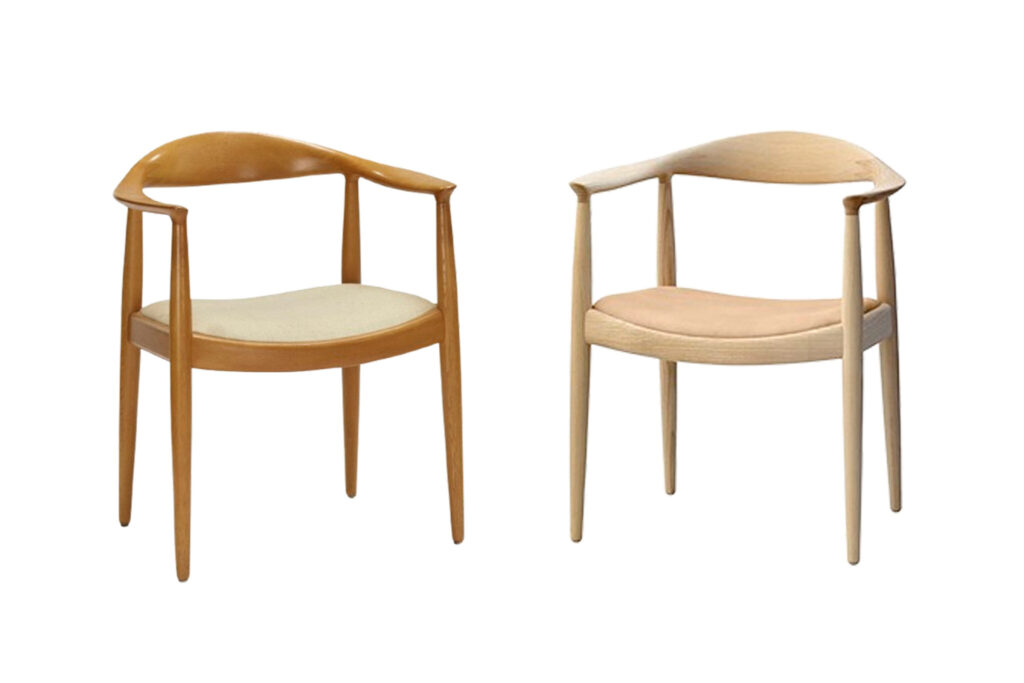
Hans J. Wegner’s JH503 and PP503 share the same design origins, but differences in manufacturer, period and production methods create a number of clear distinctions. The principal points are compared below.
Original Production and Reissue
Johannes Hansen | The JH503 is the original production version of Wegner’s 1949 design, made by Johannes Hansen, his most trusted cabinetmaking partner at the time. Depending on the period, examples may carry stamps, branded marks or labels, and these details can affect value.
PP Møbler | Since 1992, the PP503 has been produced by PP Møbler under a formal agreement with the Wegner family. It is an authorised continuation that closely follows the original design and drawings. Although the production background and processes differ, its precision and structural execution are extremely high. PP Møbler examples carry the company’s branded mark or plate.
Size, Details and Materials
Johannes Hansen | JH503 examples were made in teak, mahogany, walnut and oak and are valued for the character of their wood. Details such as the finger joints vary according to production period.
PP Møbler | The PP503 is available in solid oak, ash, cherry and walnut, with finishes including soap, white oil and black tannin staining. The seat can be specified in leather, fabric or cane, giving it a high degree of customisation for contemporary interiors. Its dimensions are broadly similar to the JH503, while modern CNC machining provides consistent production quality.
Price and Market Value
Johannes Hansen | ¥850,000–¥1,000,000 (as of January 2026)
JH503 production has ended and examples are now available only on the vintage market. Teak versions are particularly popular, while well-preserved examples retaining original stamps or branded marks are highly sought after by collectors and have continued to rise in value.
PP Møbler | ¥1,057,100–¥1,511,400 (as of January 2026)
The PP503 remains in current production and is made to order, typically requiring around four to six months. Pricing varies according to material and finish. Official warranty support and the possibility of future repair and maintenance are important advantages. Its value rests less on rarity than on manufacturing quality and secure authorised provenance.
JH-503 and PP-503 | Continuity and Aesthetic Values
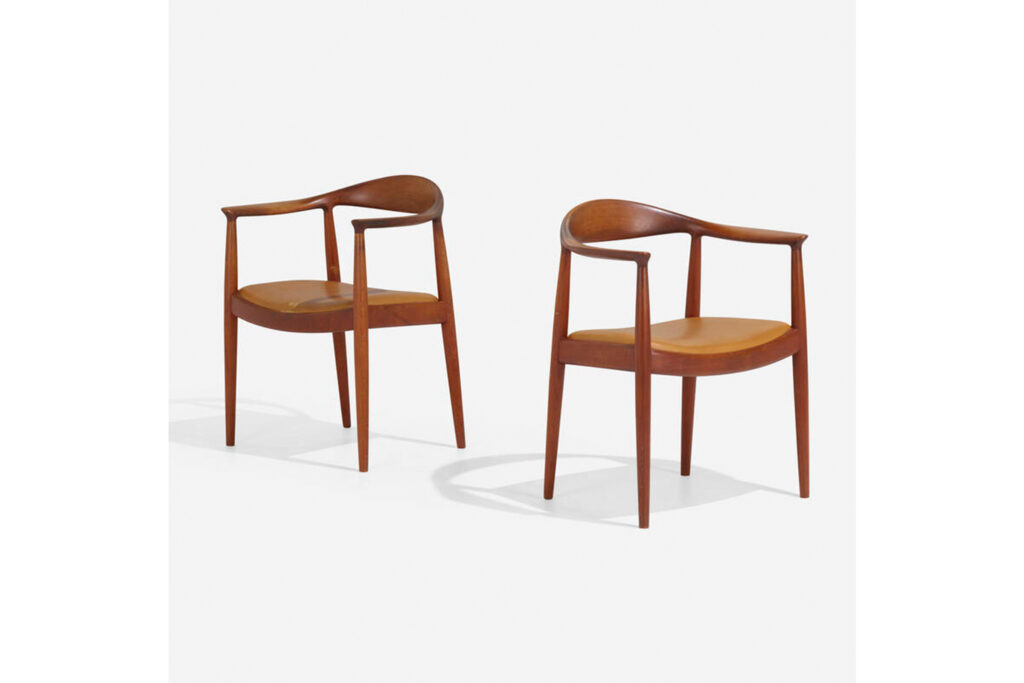
Designed by Hans J. Wegner in 1949, “The Round Chair” reaches the present through two models, JH503 and PP503, each reflecting the values and methods of a different period. The Johannes Hansen JH503 is a historical record in which the original design thinking and the cabinetmaking skills of its era are concentrated, with each surviving example carrying traces of its own time. The PP Møbler PP503, by contrast, respects Wegner’s design philosophy while carrying it forward through contemporary technology and a sustainable production system.
Despite their different backgrounds, both models preserve the essential beauty that Wegner pursued: a flowing form, a structure stripped of unnecessary elements, and careful workmanship that reveals the character of the material. These qualities continue to give the chair a quiet presence in everyday life and allow the design to retain its relevance across generations.