About
Lifespan: 1894–1967
Birthplace: Ordrup, north of Copenhagen
Manufacturer: Louis Poulsen
Story
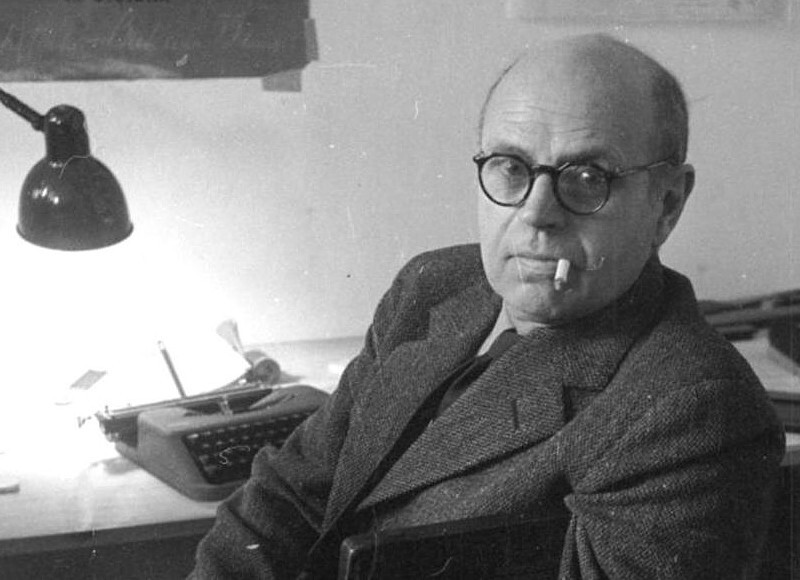
Poul Henningsen (1894–1967), commonly known by his initials “PH,” was one of twentieth-century Denmark’s leading lighting designers, architects, and critics. Rather than treating the bulb itself as the object of design, he focused on how light reaches the eye and shapes a room. The family of PH lamps that grew from this research fundamentally changed the direction of modern Danish lighting.
Born in Ordrup, north of Copenhagen, in 1894, he was the son of writer Agnes Henningsen and writer Carl Ewald. Raised in an unconventional cultural environment, he studied architecture and technical subjects at vocational and technical institutions. He never qualified formally as an architect, instead developing his practice through professional work and independent study.
When Henningsen began working with electric light in the 1920s, electrical lighting was spreading rapidly, but bare bulbs produced severe glare and hard shadows. He set himself the task of shielding the light source from direct view, directing light where it was needed, and creating softer shadows. This research led to the PH system, in which several shades reflect and control the light.
The three-shade system at the heart of the PH lamp applies the principle of a logarithmic spiral to the curved shade surfaces so that light from the source is reflected in a controlled way. The crucial point was not the lamp’s silhouette but the mechanism by which useful light could be distributed over a table or room while suppressing glare. It was conceived as a system that could be adapted through different shade sizes, materials, and light sources rather than as a single fixed object.
From around 1924 Henningsen collaborated with Louis Poulsen. His lighting won a gold medal at the 1925 Paris Exposition, and in 1926 he established the three-shade system. The principle was subsequently developed across pendant, table, and floor lamps. The seven-shade PH Septima appeared in 1928, followed later by the PH Louvre in 1957 and the PH 5, PH Artichoke, and PH Snowball in 1958. His investigation of controlled light continued throughout his life.
Henningsen was never only a lighting designer. He worked across architecture, furniture, pianos, stage design, film, and writing, and edited the magazine Kritisk Revy from 1926 to 1928. Through criticism of architecture, cities, and everyday culture, he repeatedly challenged authority and convention from functionalist and cultural-radical positions. For Henningsen, design was not merely a question of form but also a social question: how everyday life could be improved.
The continuing relevance of the PH 5 and PH Artichoke is not simply a matter of iconic form. Their underlying principles—avoiding glare, concealing the light source, and shaping a room through reflected light—can be applied across different types of lighting and different periods. Henningsen therefore occupies a distinctive place in Danish design history as a designer not merely of lamps, but of light itself.
History & Works
1894 (0 years old)
Born on 9 September in Ordrup. His mother was writer Agnes Henningsen and his biological father was writer Carl Ewald.
1911–1917
Studied architecture and technical subjects at Frederiksberg Technical School and technical institutions in Copenhagen. He did not take a formal degree and moved into design through practice and independent study.
c. 1919–1920
Began working as an architect and, after collaborating with Kay Fisker, developed an independent design practice.
1921 (27 years old)
Began writing architectural and cultural criticism for newspapers including Politiken, expanding his public engagement with the relationship between design and society.
1924 (30 years old)
Began developing lighting with Louis Poulsen, researching ways to reduce glare and create comfortable illumination through reflected light.
1925 (31 years old)
Won a gold medal in the lighting category at the Paris Exposition. His research into multilayer shades, later developed into the PH system, gained international recognition.
1926 (32 years old)
Established the three-shade system. It was used at venues including Copenhagen’s Forum and the Danish Museum of Decorative Art (now Designmuseum Danmark). He also began publishing Kritisk Revy.
1928 (34 years old)
Presented the prototype of PH Septima, composed of seven glass shades, at the Danish Museum of Decorative Art.
1931 (37 years old)
Presented the PH Grand Piano, extending his functionalist thinking beyond lighting to furniture and musical instruments.
1932 (38 years old)
Presented the Snake Chair (Slangestolen), formed from a dramatically bent length of steel tube and reflecting his interest in international modernism.
1933 (age 39)
Published the cultural-critical book Hvad med kulturen?
1935 (age 41)
Produced the film Danmarksfilmen, continuing to address society and culture through film, stage work, writing, architecture, and design.
1941 (age 47)
Worked as an architect for Tivoli Gardens, contributing to architecture, lighting, and stage environments within the park.
1943 (age 49)
Fled Nazi-occupied Denmark for Sweden, continuing his anti-authoritarian cultural activities during the war.
1946 (age 52)
Participated in the reconstruction of Tivoli’s Glass Hall (Glassalen), which had been destroyed during the war.
1957 (age 63)
Designed the PH Louvre for a church in Skodsborg. Its thirteen shades form a spherical arrangement that produces even, low-glare light in all directions.
1958 (age 64)
Designed the PH 5, PH Artichoke, and PH Snowball. PH 5 responded to changing bulb shapes and sizes while controlling glare; PH Artichoke was developed for Copenhagen’s Langelinie Pavilion.
1967 (age 72)
Died on 31 January in Hillerød. His collaboration with Louis Poulsen continued until the final years of his life.