The Background and Design Philosophy of Wegner’s “Mama Bear Chair”
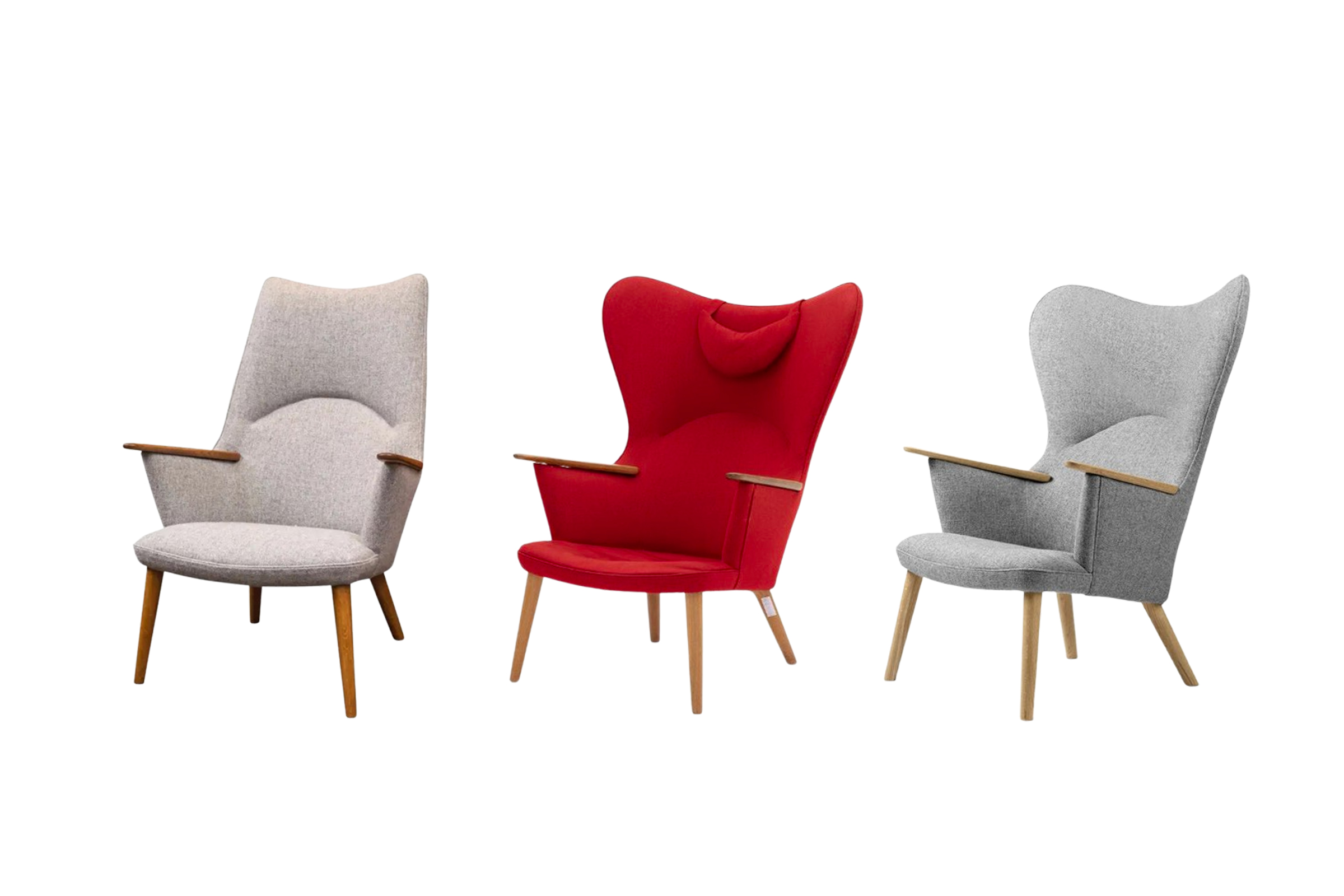
The Mama Bear Chair refers to a group of easy chairs designed by Hans J. Wegner in the 1950s. As the nickname suggests, these chairs are characterised by forms that seem to embrace the sitter like a mother bear. They are generally understood as gentler, more approachable counterparts to the better-known Papa Bear Chair (AP19). Their central appeal lies in the combination of sculptural beauty and ergonomic comfort: rounded backs and generous arms create visual warmth while providing rational support for the body. Through his continuing pursuit of purification and simplification, Wegner sought to create furniture that brought a sense of calm and ease to everyday use, and the Mama Bear chairs are a clear expression of that philosophy.
The group includes the upholstered AP27, the distinctive wingback AP28, and the CH78, a later reintroduction for contemporary production. Each was conceived not simply as a decorative object but as a durable tool for daily life, bringing Wegner’s design philosophy and craftsmanship together at a high level. Wegner repeatedly worked from the essential elements of a chair—four legs, a seat, a back and arms—while balancing ergonomic comfort with formal clarity. The nickname “Mama Bear” reflects the enveloping quality of these forms, which are often discussed alongside the Bear Chair (AP19) and Mini Bear Chair (AP20).
AP27 | Vintage: The Early Non-Wingback Model
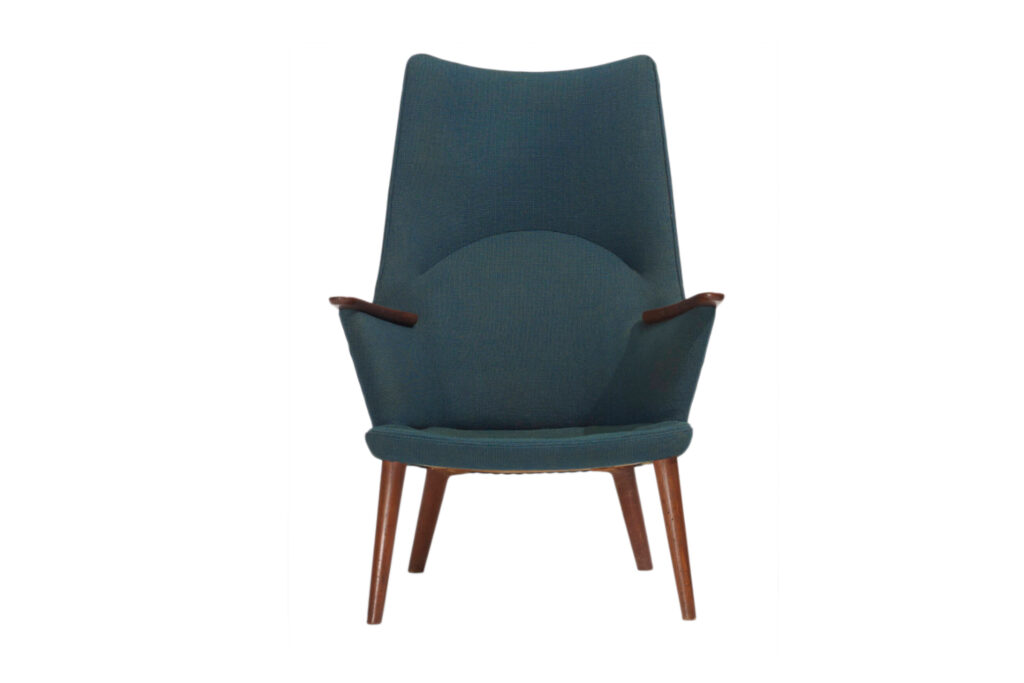
Designed in 1954, the AP27 is an early model in the Mama Bear family and is distinguished by its straight-backed form without wings. It combines a restrained silhouette with a relatively low seat and was produced in versions with either fully upholstered arms or exposed wooden arms. Oak and teak were among the woods used. Standard dimensions are approximately W750 × D800 × H1030 mm, with a seat height of 400 mm. The chair was manufactured by AP-Stolen during the 1950s and 1960s and, following the company’s closure, is now found only on the vintage market.

AP28 | Vintage: The Rare Wingback Version
The AP28 was designed in the same year, 1954, as a wingback version related to the AP27. Its back rises into curved side wings, while the characteristic exposed wooden arm ends recall the paws of a bear; details of these “claws” can vary between examples. At approximately W860 × D800 × H1080 mm, it is larger than the AP27 and has a more enveloping presence. It appears less frequently on the market than the AP27 and is regarded as a comparatively rare model.

CH78 | Current Production: The Modern Revival (2020–Present)
The CH78 is a lounge chair designed in 1954 and also known by the Mama Bear nickname. Carl Hansen & Søn reintroduced it in 2020, and it remains in current production. Its character is light and elegant while retaining the ergonomic comfort associated with Wegner’s upholstered seating. A neck pillow is available as an option, FSC-certified oak or walnut is used for the exposed wood, and upholstery can be specified in Kvadrat textiles or leather. Its internal construction and seating character differ substantially from the vintage AP28.
Vintage and Current Production Compared | AP-Stolen vs CARL HANSEN & SØN

Authenticity and Reissue Approach
AP-Stolen | Among Wegner’s Mama Bear chairs of the 1950s, the original AP28 manufactured by AP-Stolen is highly regarded on the vintage market. AP-Stolen produced many of Wegner’s fully upholstered chairs and specialised in upholstery work, with each piece carefully finished by skilled upholsterers. Surviving AP-Stolen examples are now scarce and valuable. Most AP-Stolen examples carry no maker’s stamp.
CARL HANSEN & SØN | Carl Hansen & Søn reintroduced the CH78 in 2020 using historical drawings and prototype material. While contemporary materials and a simplified modern production process are employed, the chair preserves Wegner’s underlying design philosophy. Current-production examples carry a Carl Hansen & Søn plate.
Internal Structure and Seating Feel
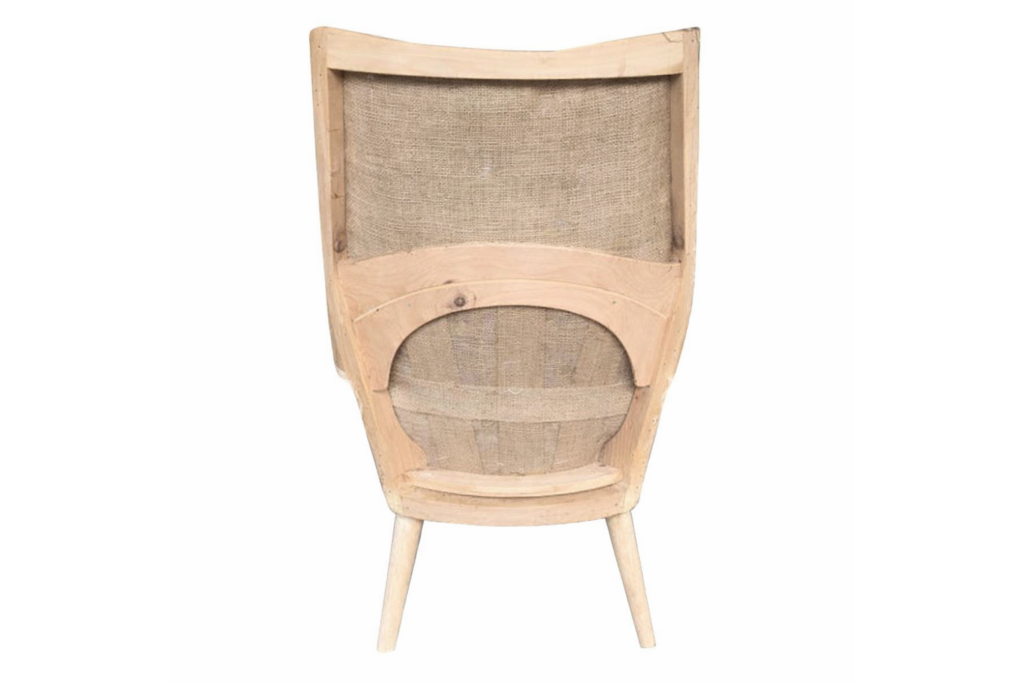
AP-Stolen | Vintage AP28 chairs used combinations of natural upholstery materials such as horsehair and cotton, creating a seat that feels substantial yet supple. The lumbar area also incorporates an internal cavity and jute webbing. Together these elements provide resilient support while retaining the soft, enveloping character associated with traditional upholstery.
CARL HANSEN & SØN | The CH78 uses polyurethane foam and a simplified internal construction. The resulting comfort has a different emphasis: the vintage chair tends to give a deeper, more luxurious sense of sinking into the upholstery, while the current-production chair offers more uniform and somewhat firmer support.
Dimensions, Details, and Materials
AP-Stolen | W860 × D800 × H1080 mm
Oak and teak were used for the wooden elements, and the arms feature the characteristic “bear paw” detail. Coarsely textured wool and cotton textiles were common, while the traditional fully upholstered construction emphasises volume and softness.
CARL HANSEN & SØN | W840 × D800 × H1060 mm
The arms and legs are made in FSC-certified solid oak or walnut, and upholstery can be selected from Kvadrat textiles or leather. Details are more precisely controlled through contemporary production techniques, including the finishing of seams and joints.
Price and Market Value
AP-Stolen | approximately ¥1,500,000–¥2,000,000 (as of January 2026)
Vintage AP28 examples are very scarce, and prices vary considerably according to condition, materials and provenance. Their market value has continued to rise.
CARL HANSEN & SØN | ¥749,100–¥828,300 (as of January 2026)
The CH78 is more accessible than the vintage AP28 and offers a wide choice of colours and materials. It is made to order, so delivery requires time, but buying new includes warranty coverage and after-sales support.
Choosing a Chair That Reflects Individual Character and Philosophy
All three Mama Bear models embody enduring aspects of Hans J. Wegner’s design philosophy, yet their histories, forms, materials and values are distinct. The vintage AP27 and AP28 carry the depth that comes with age and rarity, allowing the chair itself to communicate something of its period. The CH78, by contrast, fits contemporary life while continuing Wegner’s ideas through a carefully reconsidered current-production model.
Choosing among them is therefore more than a question of purchasing a functional object. It is also a decision about what qualities one wants furniture to bring into everyday life. Each Mama Bear model answers that question differently, and together they demonstrate how twentieth-century Danish design and specialist craft can continue to live across changing production methods and generations.
Related Articles
・Papa Bear Chair | Hans J. Wegner’s Icon of Danish Modern Design
・AP Stolen | The Upholstery Workshop Behind Wegner’s Masterpieces
・Carl Hansen & Søn
・Hans J. Wegner | Danish Furniture Designer
・Mini Bear Chair